


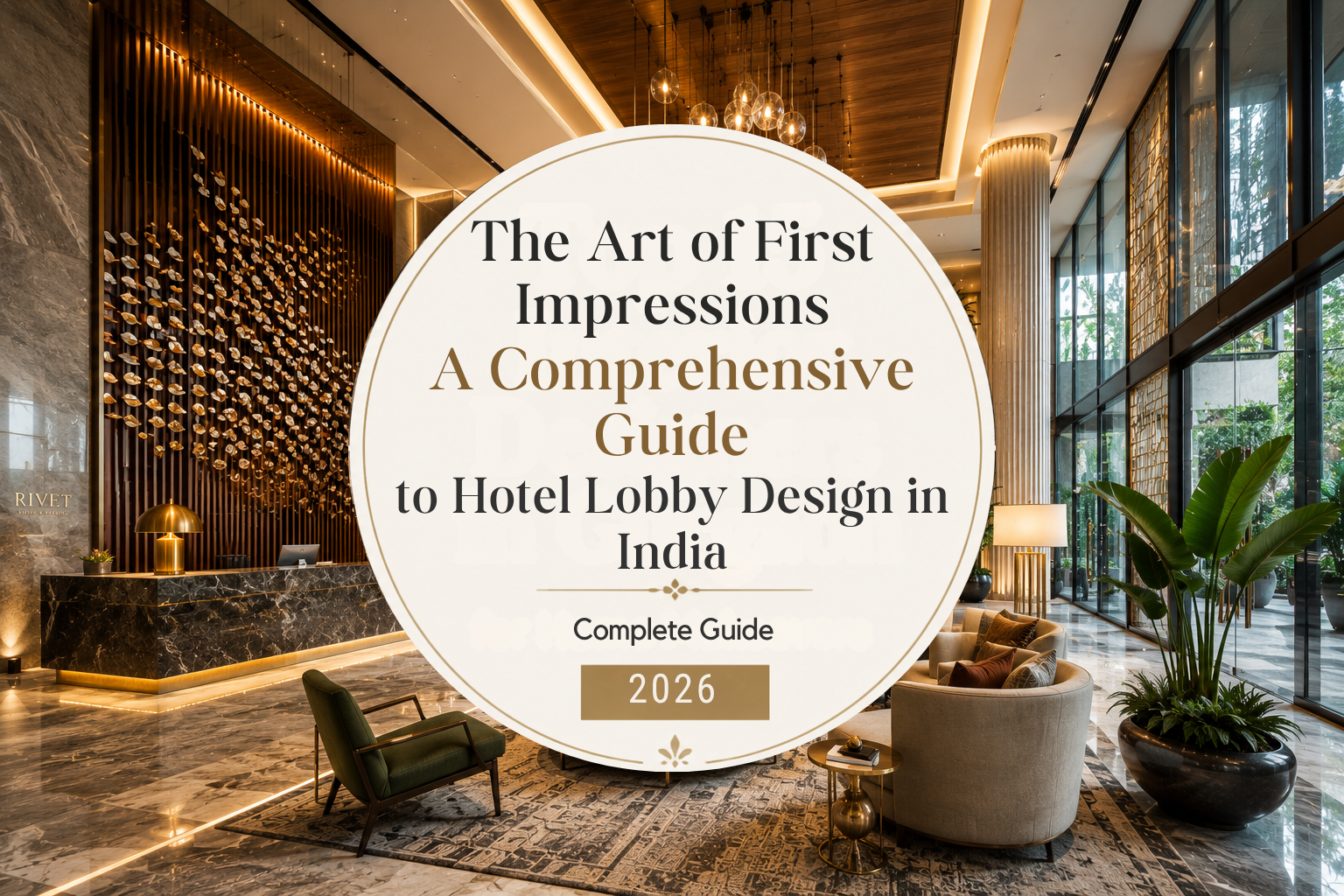
Hotel Lobby Design in India: Creating Powerful First Impressions
The Power of the First Seven Seconds
When a traveler walks through the doors of a hotel, their mind immediately begins to process the atmosphere. Within the first seven seconds, guests subconsciously assess the level of service, safety, comfort, and luxury they will expect during their stay. This crucial psychological threshold makes the entrance zone a crucial space in any hospitality setting. Over the past ten years, hotel lobby design in India has transformed from a mere waiting area to a storytelling masterpiece that reflects a brand’s core values and delivers a stunning sensory experience.
Designing a lobby is much more than choosing beautiful furniture or hanging an expensive chandelier. It is a highly strategic exercise in spatial planning, light manipulation, acoustic control, and brand alignment. A well-designed lobby guides the guest effortlessly through their check-in journey, provides comfortable pockets for relaxation, and transitions smoothly from daytime functionality to evening ambiance. Let us explore the key principles, structural layouts, and creative strategies that define world-class lobby design in the modern hospitality landscape.
Why Modern Hotel Lobby Design in India Demands a Cultural Connection
India is a country with rich cultural stories, diverse regions, and a renowned tradition of hospitality. Today, successful hotel lobby design in India must be deeply rooted in the country’s heritage while also catering to the needs of a highly globalized traveler. Today’s travelers don’t want cookie-cutter designs that look the same in London, Tokyo, or New Delhi. They want authentic, local experiences that make them feel at home the moment they step inside.
To create this authentic connection, today’s hotel lobby design in India draws on regional craftsmanship, local materials, and traditional design motifs reimagined for today’s audience. This can be seen in custom brass screen installations inspired by traditional Mughal jaali work, large-scale hand-painted wall paintings by local folk artists, and the extensive use of regional stones such as Jaisalmer yellow sandstone, Makrana marble, or deep Cuddapah stone. By weaving these cultural stories into a contemporary framework, designers create high-impact portals that make travelers feel pampered and truly connected to the destination.
Whether you’re creating a boutique heritage stay in Udaipur, a coastal resort in Goa, or a luxurious corporate hotel in a bustling metropolis like Gurgaon, the fundamentals of hotel lobby design in India are based on warmth, elegance, and an unparalleled sense of welcome.
Key Architectural and Spatial Elements of a Lobby
To design an effective lobby, one must look at the space through the lens of both the architect and the interior decorator. The architectural skeleton determines how people move, while the interior design determines how they feel. Below are the key pillars of structural lobby design.
1. Compression and Expansion of Space
One of the most effective architectural techniques used in luxury lobbies is the play of scale. Designers often create a slightly lower ceiling height in the immediate entry vestibule, which then opens into a dramatic double- or triple-height main lobby area. This architectural transition of compression and expansion creates an instant feeling of awe, making the lobby feel incredibly grand, open, and breath-taking as the guest steps deeper into the building.
2. Smart Zoning and Flow Management
A lobby must accommodate multiple functions simultaneously without looking cluttered or chaotic. Guests checking in should not collide with business travelers working on laptops, nor should they disrupt people enjoying a quiet afternoon tea. Designers achieve this through smart zoning, utilizing visual cues rather than solid physical walls.
- The Active Zone: This includes the main entry path, the registration desks, and the elevator lobby. It requires clear pathways, durable flooring, and direct sightlines.
- The Social Hub: A semi-private lounge area with comfortable, modular seating arrangements that encourage conversation or brief meetings.
- The Quiet Zone: Tucked away from the main high-traffic corridors, this area features individual lounge chairs, personal reading lights, and charging outlets for business travelers looking to catch up on emails.
By using acoustic screens, variations in ceiling heights, strategically placed decorative planters, and distinct floor rugs, designers can define these separate zones seamlessly while maintaining an open, airy environment.
Selecting the Right Materials and Finishes
The materials chosen for a hotel lobby must be incredibly durable to withstand heavy foot traffic, heavy luggage wheels, and continuous cleaning, all while looking flawless and luxurious. High-end natural stones, such as granite and marble, remain the gold standard for main flooring pathways due to their longevity and timeless elegance.
However, to prevent the lobby from feeling cold and institutional, designers balance these hard stone surfaces with softer, tactile elements. Plush wool-blend carpets, textured wallcoverings, solid wood paneling, and rich upholstery fabrics like velvet and leather add layers of warmth and acoustic dampening. Metal accents in brushed brass, antique bronze, or matte black steel provide a polished, contemporary finish that highlights architectural details.
When selecting materials for a commercial project of this scale, working with experienced professionals is essential to ensure that every finish meets commercial fire ratings, acoustic standards, and maintenance requirements. If you are planning a commercial or high-end hospitality project in northern India, consulting with a trusted Studio Rivet can make a significant difference. As a leading Architect & Interior Designer in Gurgaon, Studio Rivet has been crafting innovative, sustainable, and highly functional commercial and residential spaces since 2005, turning complex design briefs into timeless physical masterpieces.
The Role of Lighting in Crafting Ambiance
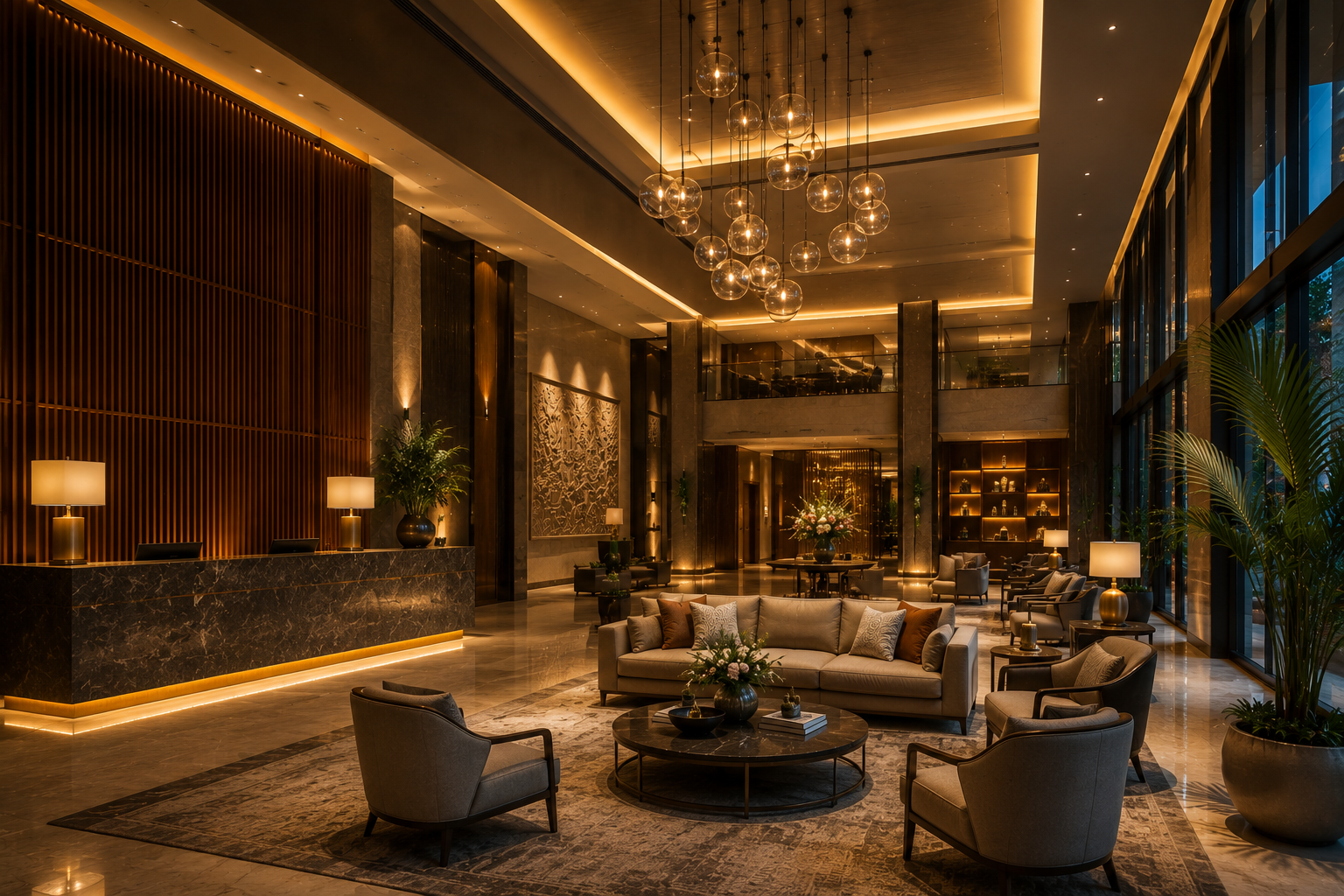
Lighting is the unsung hero of interior design, especially in the hospitality sector. It dictates how color palettes are perceived, defines focal points, and directly influences guests’ mood and energy levels. A successful lobby design utilizes a layered lighting strategy that adapts to different times of the day.
Daylight Integration
During the day, maximizing natural sunlight through expansive floor-to-ceiling glass facades or skylights makes the lobby feel fresh, welcoming, and connected to the outdoor environment. It also reduces energy consumption and supports the natural circadian rhythms of both guests and staff.
The Evening Transition
As daylight fades, the lighting scheme must transition smoothly to create a warm, intimate, and relaxing atmosphere. This is achieved through three distinct layers of lighting:
- Ambient Lighting: Soft, indirect light from concealed cove lighting in the ceilings or architectural columns that provides general illumination without glare.
- Task Lighting: Focused, highly functional lighting at the check-in counters, concierge desk, and individual reading nooks to ensure staff and guests can read and write comfortably.
- Accent Lighting: Dramatic spotlighting on art pieces, water features, architectural columns, or custom design installations to create visual depth and point-of-interest zones.
Integrating smart lighting control systems allows hotel operators to pre-program these transitions, ensuring that the lobby always looks its absolute best, whether it is a bright summer morning or a rainy winter evening.
Biophilic Design: Bringing Nature Indoors
Incorporating natural elements into built environments is one of the most significant and enduring modern trends in hotel lobby design in India. Biophilic design has been proven to lower stress levels, improve air quality, and enhance overall cognitive well-being, making it a powerful tool for creating a welcoming atmosphere.
This goes far beyond putting a few potted plants in the corners of the room. True biophilic design involves integrating large-scale living green walls, indoor water features that provide soothing white noise, natural wood elements, and views of landscaped gardens. The sight and sound of trickling water, combined with lush green foliage, can instantly transport a stressed traveler from a chaotic city street into a tranquil, calming sanctuary.
Sensory Branding: Looking Beyond the Visuals
A truly memorable first impression engages all five senses, not just sight. Leading luxury hotels invest heavily in sensory branding to create a cohesive, unforgettable brand identity.
Acoustic management is critical in keeping a lobby feeling premium. Large open lobbies with stone floors can easily echo, creating an uncomfortably loud environment. Designers combat this by using acoustic plaster on ceilings, fabric wall panels, and heavy drapery to absorb sound, paired with soft, curated background music that matches the brand’s persona.
Olfactory branding, or signature scents, is another highly effective tool. A subtle, signature aroma diffused through the HVAC system, such as sandalwood, citrus, or jasmine, can evoke a strong sense of comfort, luxury, and familiarity, ensuring that guests associate that specific scent with their pleasant stay for years to come.
Frequently Asked Questions
Ready to Design an Exceptional Hospitality Experience?
From luxury hotels and boutique resorts to restaurants, cafés, and hospitality destinations, Studio Rivet creates architecture and interior environments that elevate guest experience, strengthen brand identity, and leave a lasting first impression.
Studio Rivet | Architecture & Interior Design Studio
49 Arjun Marg, DLF Phase 1, Sector 26, Gurugram 122002
+91 9971685572
|
+91 9818491069
|
info@studiorivet.in
Work With Studio Rivet
Creating an exceptional hotel lobby requires a masterful blend of architectural precision, artistic vision, and deep technical expertise. Studio Rivet is an established architecture and interior design firm in Gurgaon, dedicated to transforming commercial, hospitality, and premium residential spaces into functional, timeless works of art across Delhi NCR and beyond.
Ready to redefine your commercial or hospitality property and create an unforgettable first impression for your guests?
Book a Free Consultation with our expert design team today.
Call +91 99588 56887 or visit Studio Rivet to explore our portfolio and start your design journey.
Laminate vs Veneer vs Acrylic: Which Cabinet Finish Is Best?
When you plan a new kitchen or wardrobe, one question always comes up: what finish should the cabine

Architecture vs Interior Design: The Real Difference (And Which One You Actually Need)
Somewhere in the first conversation of almost every new residential project we take on at Studio Riv
School Architecture Design in India: Key Principles for Modern Educational Spaces
Educational spaces are no longer just brick-and-mortar structures with rows of desks and a blackboar
Leave a Reply