


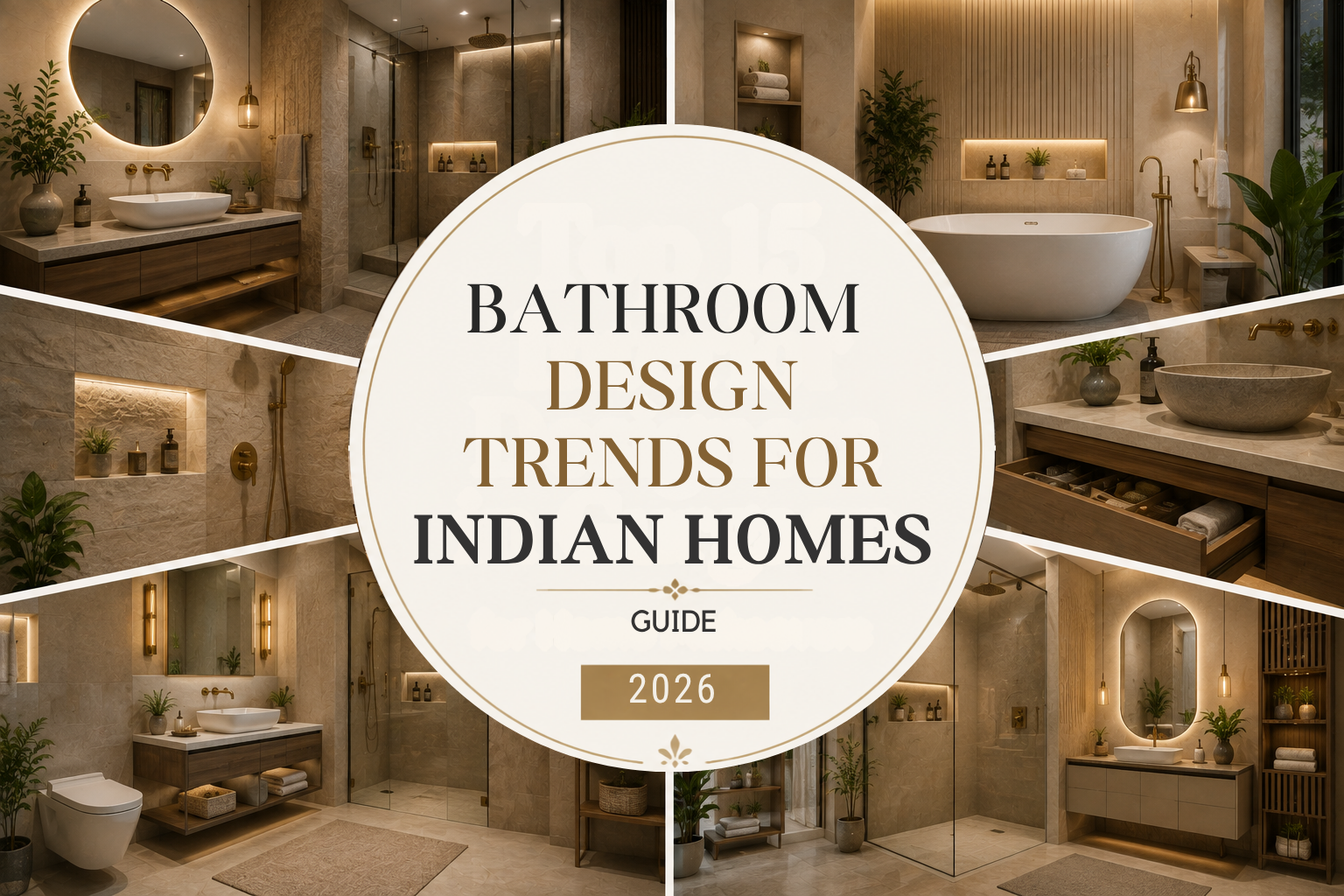
Bathroom Design Trends for Indian Homes 2026
Bathrooms are no longer treated as purely functional spaces. In modern Indian homes, the bathroom is becoming an important part of the overall interior design, with homeowners looking for spaces that feel comfortable, elegant, practical, and easy to maintain.
In 2026, bathroom design is moving towards a combination of natural materials, clean layouts, smart storage, statement surfaces, better lighting, and spa-inspired comfort. The focus is not simply on making a bathroom look expensive but on creating a space that works beautifully for everyday living.
For Indian homes, this becomes even more important because bathrooms need to handle humidity, frequent use, hard-water concerns, ventilation requirements, and varying space sizes. If you are also reworking the rest of the home alongside the bathroom, our broader collection of bathroom design ideas is a good place to see how these trends translate into full room layouts.
Here are 15 bathroom design trends that can make a noticeable difference in a modern Indian home.
Quick Answer: 2026 Bathroom Trends at a Glance
- Colours: warm neutrals like beige, taupe, sand and muted green over cool white
- Surfaces: large-format tiles, natural stone or stone-look porcelain
- Layout: walk-in showers with frameless glass over bulky enclosures
- Storage: concealed storage, floating vanities and recessed shower niches
- Cost range: Rs 1.5 lakh to Rs 6 lakh+ depending on size and finish level
In This Article
- Warm Neutral Bathroom Interiors
- Large-Format Tiles
- Spa-Inspired Bathrooms
- Floating Vanities
- Statement Mirrors
- Layered Bathroom Lighting
- Natural Stone and Stone-Look Finishes
- Wood Accents for Warmth
- Smart Bathroom Features
- Smart Storage Solutions
- Walk-In Showers
- Curved Bathroom Elements
- Biophilic Bathroom Design
- Matte Finishes and Brushed Metals
- Personalised Bathroom Design
- Proven Material Palette Combinations
- Bathroom Renovation Cost in India (2026)
- How to Choose the Right Bathroom Design
- Frequently Asked Questions
1. Warm Neutral Bathroom Interiors
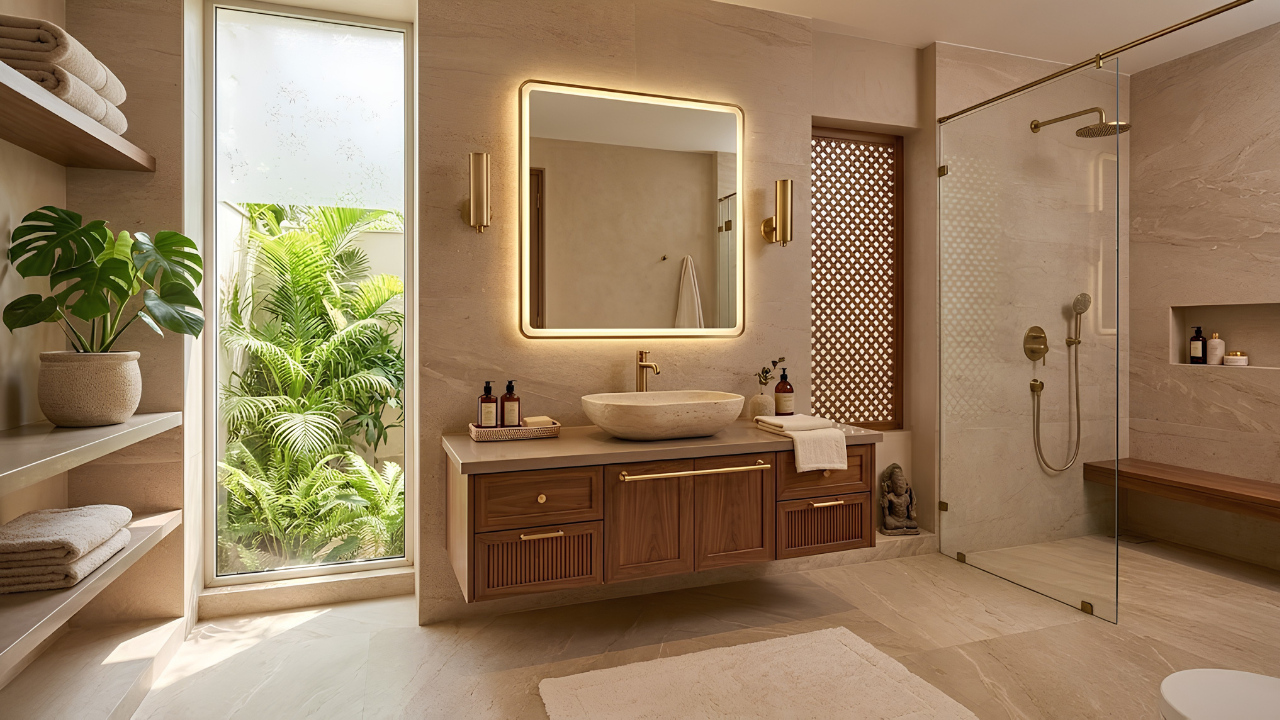
Cool white bathrooms are making room for warmer and more welcoming colour palettes.
Beige, ivory, taupe, warm grey, sand, earthy brown, and muted green can make a bathroom feel sophisticated without becoming overwhelming.
These colours work particularly well with natural stone, wooden-look finishes, brushed metal fixtures, and soft lighting.
Instead of using many different colours, designers are creating depth through different textures within a similar colour family. If you are planning this palette across the rest of the home too, our guide on best wall colours for Indian homes covers how warm neutrals translate to living areas and bedrooms.
2. Large-Format Tiles
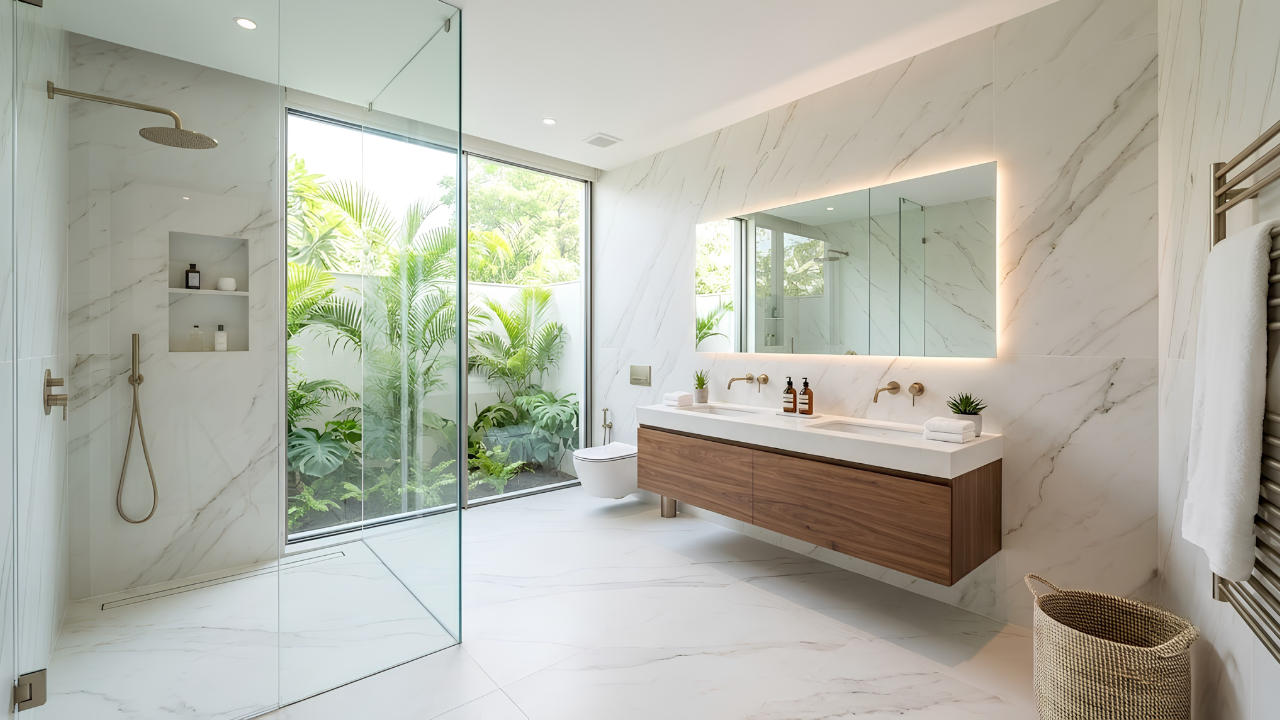
Large-format tiles are becoming increasingly popular in contemporary bathrooms.
One major advantage is that fewer grout lines create a cleaner visual appearance. They can also make compact bathrooms feel more spacious because the surfaces appear more continuous.
Marble-look porcelain and stone-effect tiles are particularly useful when homeowners want a premium appearance without the maintenance associated with some natural stones.
For Indian homes, choosing a tile with an appropriate slip-resistant finish is especially important in wet areas. Our detailed guide to the best flooring options for Indian homes covers slip resistance and maintenance factors in more depth if you are choosing tiles for the rest of the house as well.
3. Spa-Inspired Bathrooms
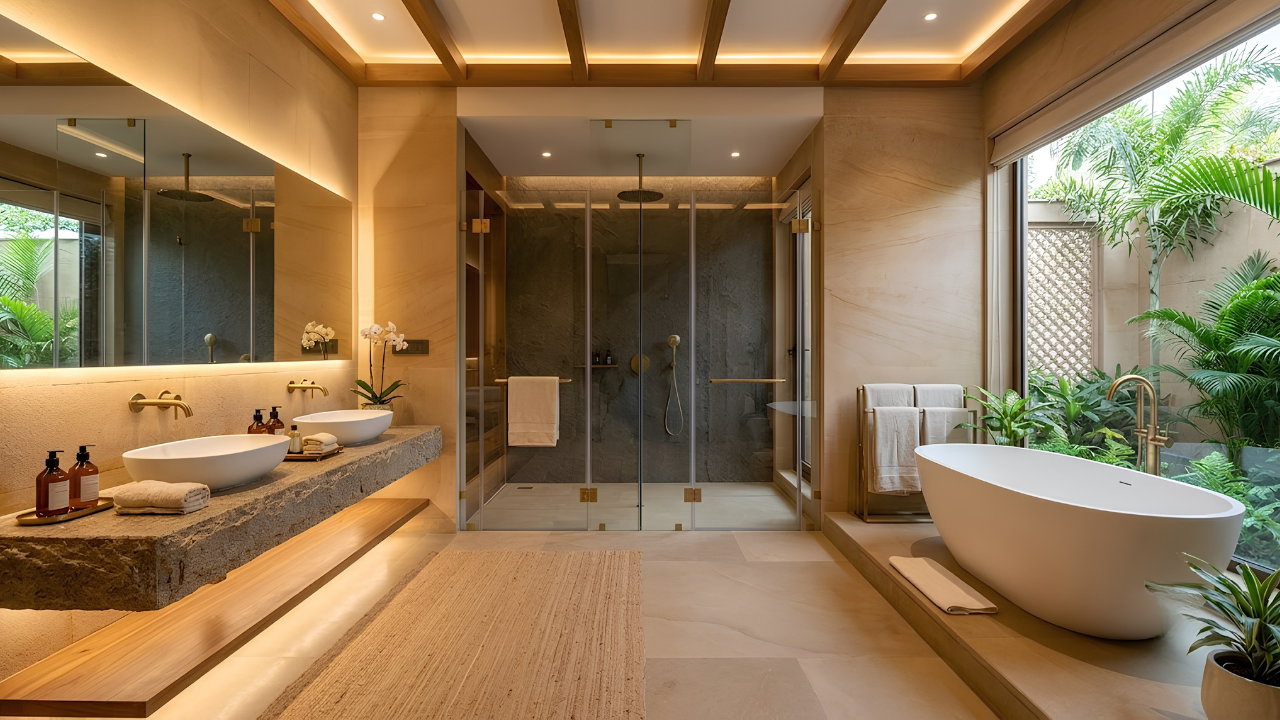
Homeowners are increasingly looking for bathrooms that provide a relaxing experience rather than simply a place for daily routines.
Walk-in showers, rainfall showerheads, built-in niches, freestanding or sculptural bathtubs, soft lighting, natural textures, and comfortable layouts can create a spa-like atmosphere.
You do not necessarily need a very large bathroom to achieve this feeling. Even a compact bathroom can feel luxurious when the layout is uncluttered and the materials are carefully coordinated. This is especially relevant for master bathrooms in larger homes, where a spa-style layout is often the starting point for the whole luxury interior design of the house.
4. Floating Vanities
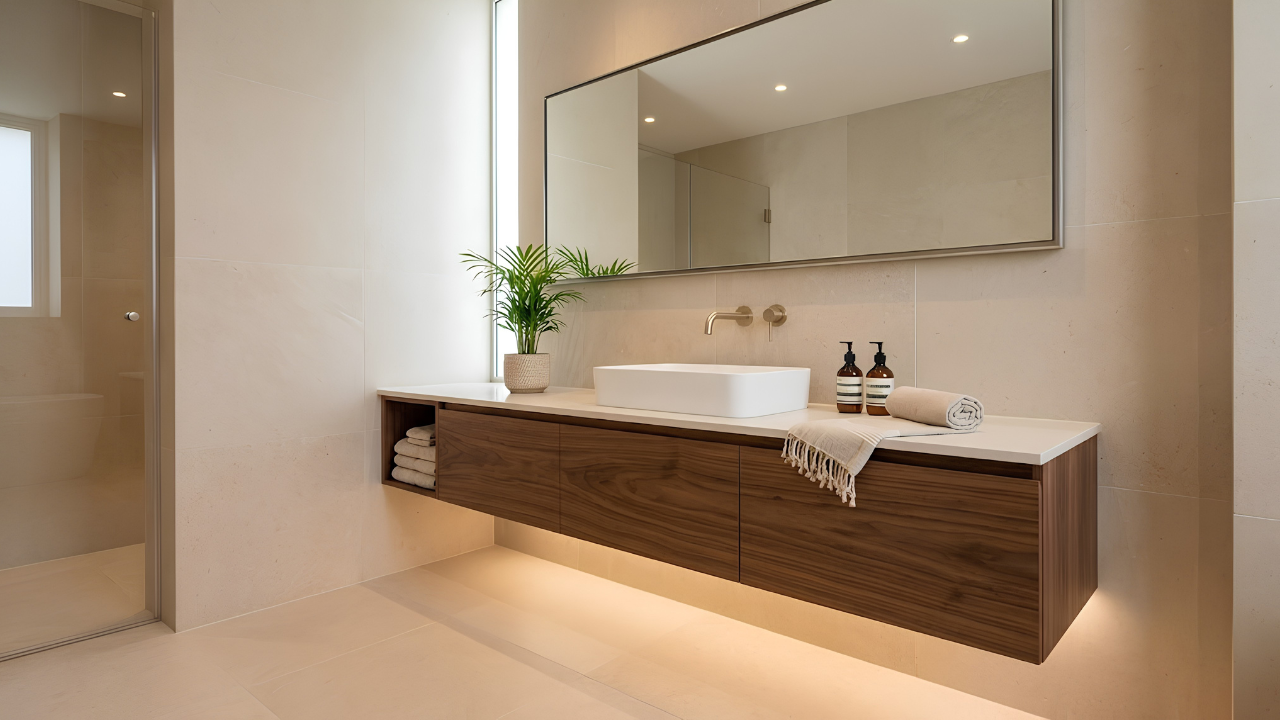
Floating vanities are a practical and stylish choice for contemporary bathrooms.
Because the vanity is raised from the floor, the bathroom can appear more open and visually lighter. The exposed floor beneath also makes cleaning easier.
A floating vanity can be customised with drawers for toiletries, grooming products, towels, and other everyday essentials.
For a premium appearance, pair a floating wooden or matte-finish vanity with a stone countertop and a simple countertop basin. When choosing between materials for the vanity itself, our comparison of laminate, veneer and acrylic finishes is a useful reference, since bathroom cabinetry needs a slightly different moisture-resistant approach than wardrobes or kitchen units.
5. Statement Mirrors
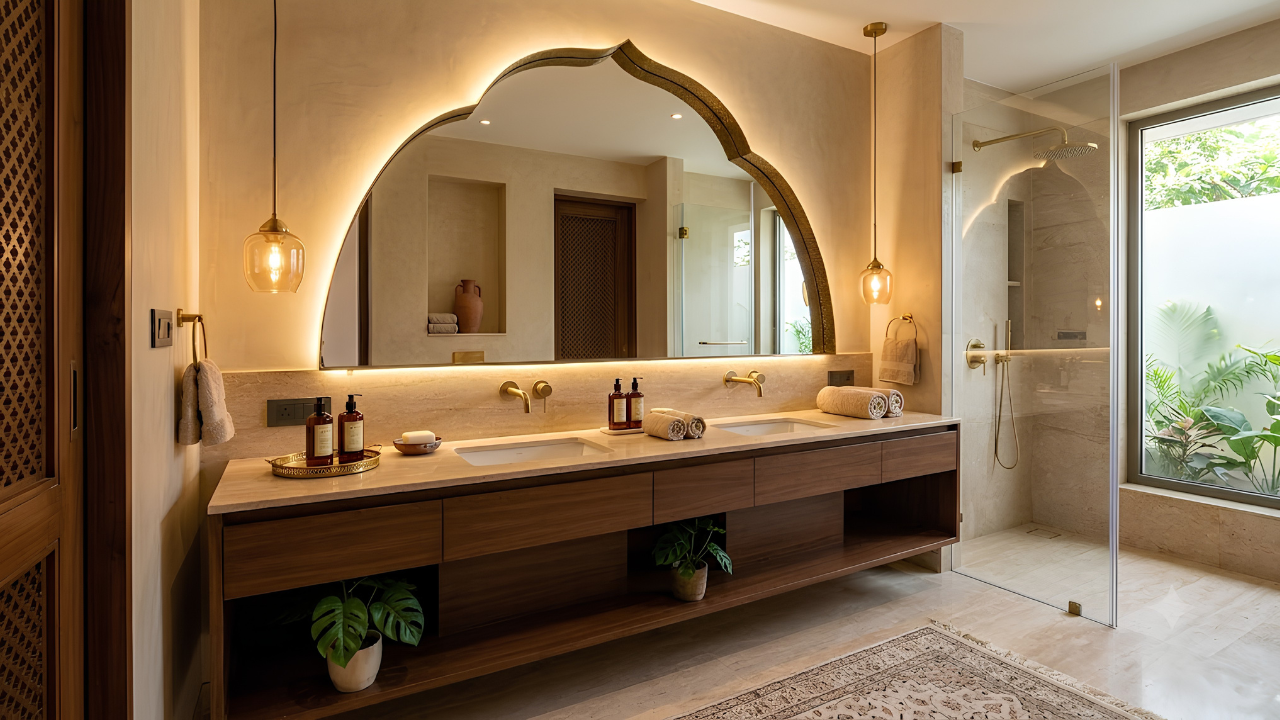
The bathroom mirror is becoming more than a functional accessory.
Large backlit mirrors, rounded mirrors, arched designs, pill-shaped mirrors, and custom geometric forms can become a visual focal point.
Backlighting also provides soft illumination around the face, making the mirror useful for grooming while contributing to the overall atmosphere.
In smaller bathrooms, a large mirror can additionally help reflect light and create a greater sense of space.
6. Layered Bathroom Lighting
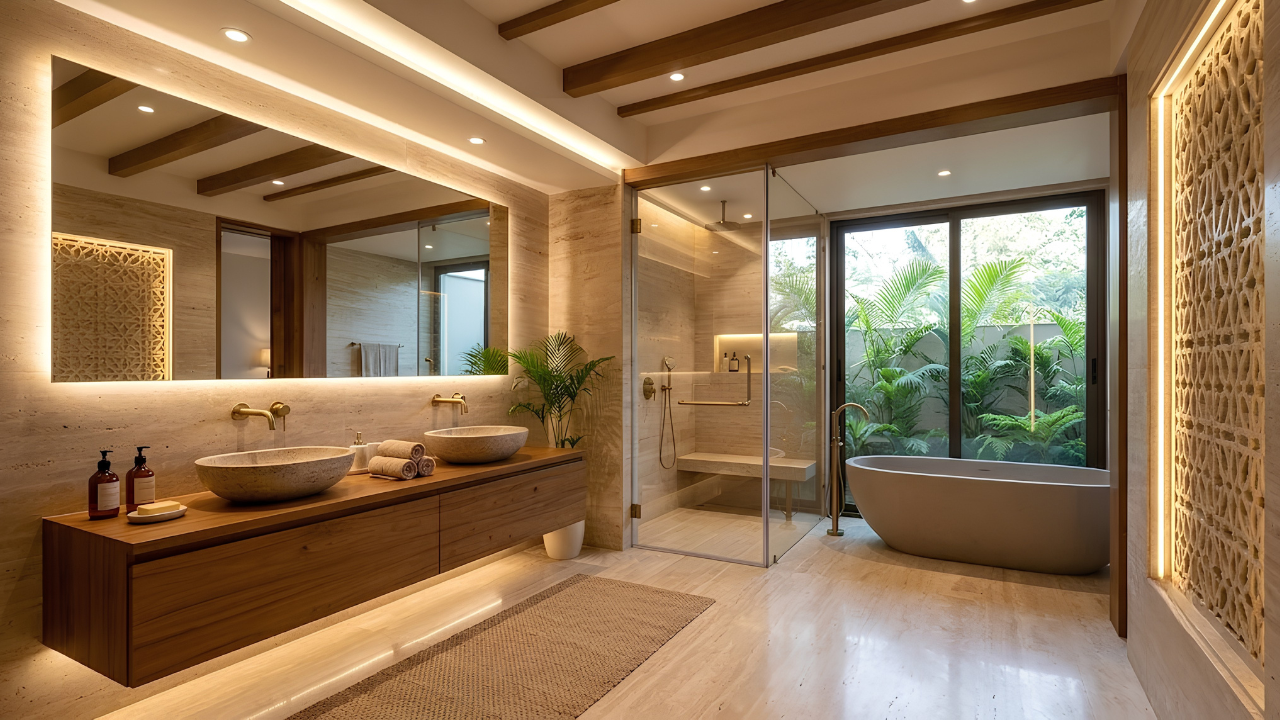
Good bathroom lighting needs to do more than simply make the room bright.
A successful lighting plan usually combines different types of illumination: general ceiling lighting, mirror lighting, shower-area lighting, under-vanity lighting, and decorative accent lighting.
Warm indirect lighting can make stone, wood, and textured surfaces appear more luxurious. At the same time, task lighting around the mirror should provide sufficient visibility for grooming. The same layering principle we recommend for false ceiling and cove lighting in living rooms works just as well scaled down for a bathroom ceiling.
7. Natural Stone and Stone-Look Finishes
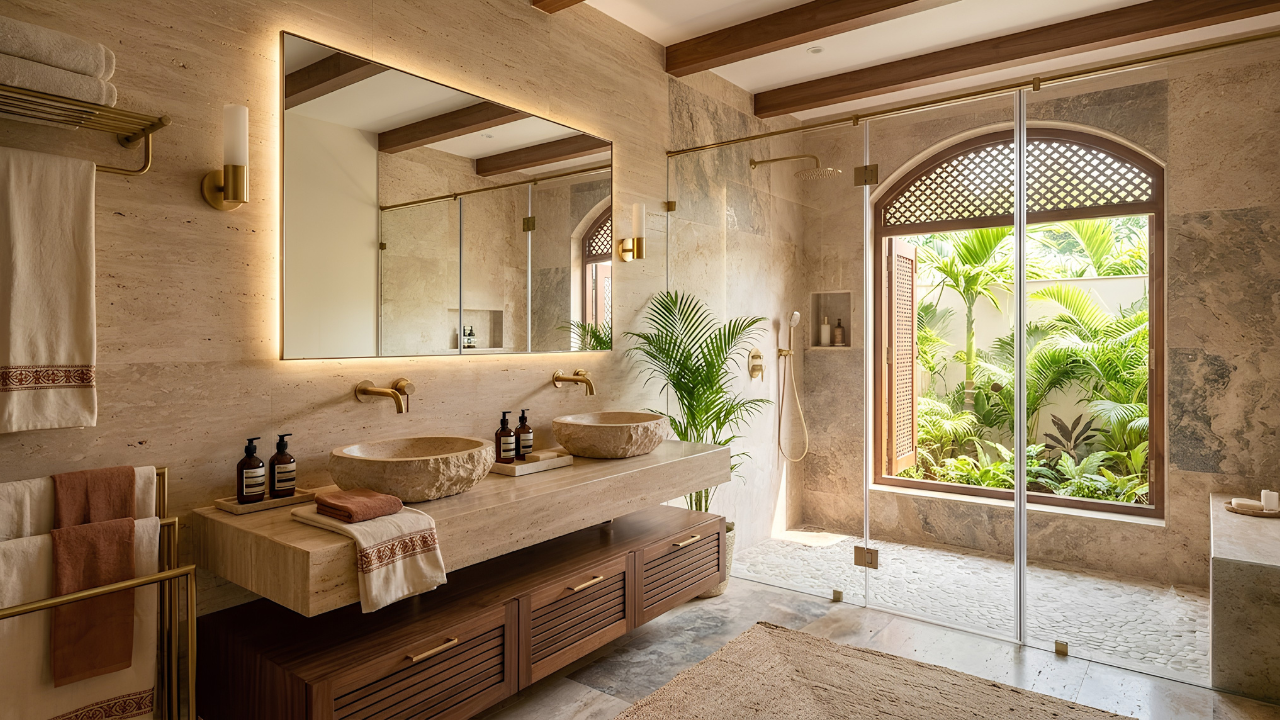
Natural materials continue to influence luxury bathroom design.
Marble, limestone-inspired surfaces, travertine-style finishes, and textured stone can bring depth and character to the bathroom.
However, natural stone needs appropriate sealing and maintenance. For homeowners who prefer easier upkeep, high-quality porcelain tiles with realistic stone patterns can provide a similar visual effect.
Using the same material across the floor, wall, and vanity area can also create a seamless designer look.
8. Wood Accents for Warmth
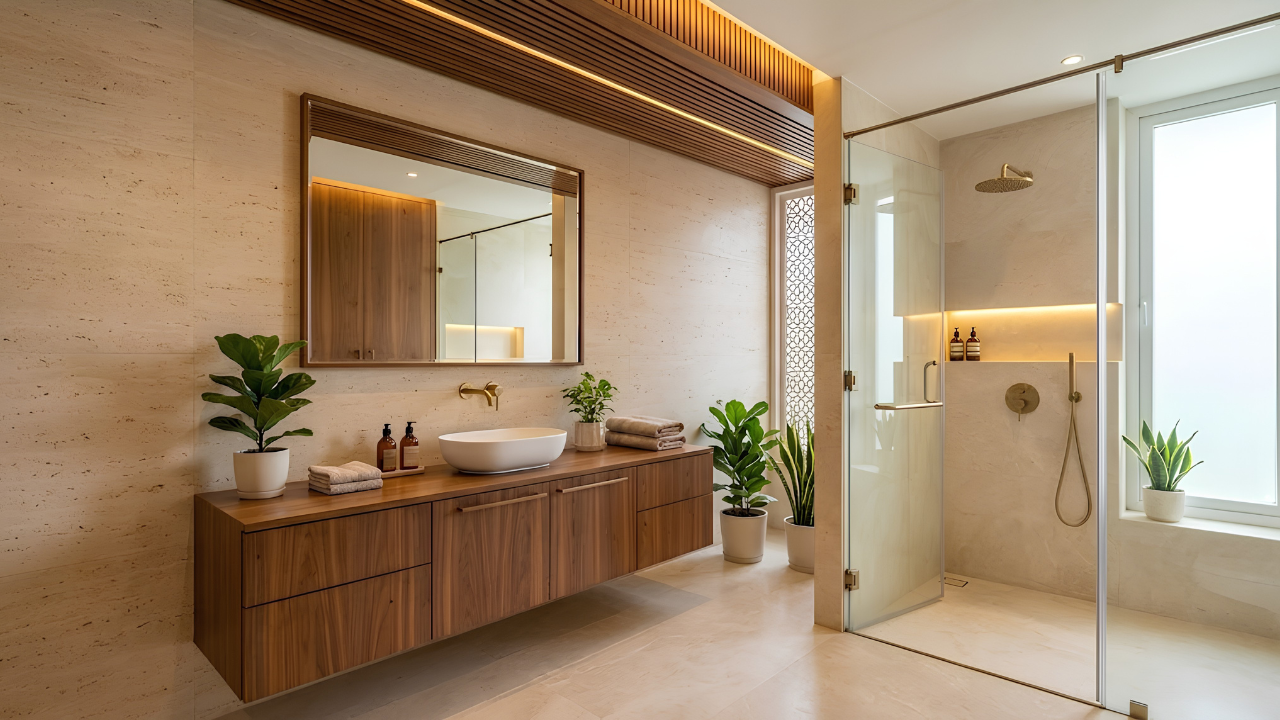
Bathrooms can sometimes feel cold because of the amount of tile, glass, and metal used.
Wood-look finishes help introduce warmth. Wood can be incorporated through vanity cabinetry, shelving, ceiling details, mirrors, or decorative wall panels.
For Indian bathrooms, moisture-resistant materials and appropriate finishes should be selected rather than using untreated natural wood in wet zones.
A combination of warm wood, stone, and soft lighting can create a balanced contemporary interior.
9. Smart Bathroom Features
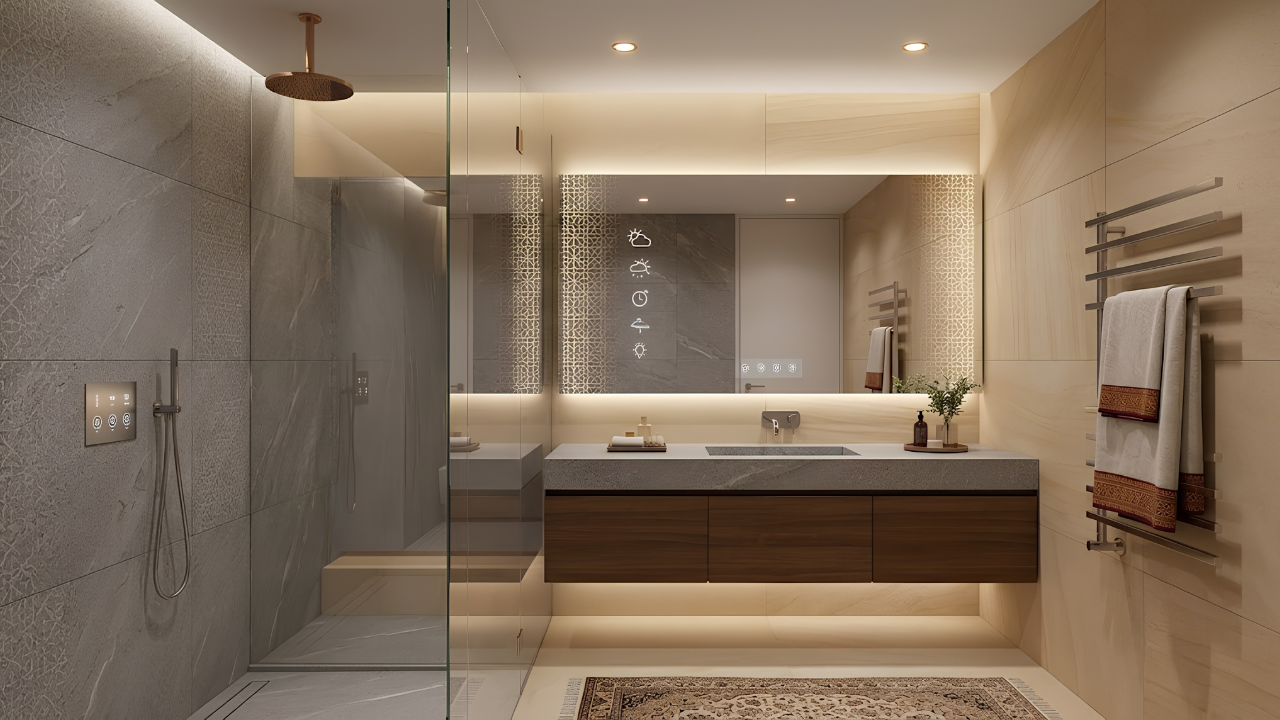
Technology is gradually becoming part of modern bathroom design.
Depending on the homeowner’s requirements and budget, smart features can include sensor-based lighting, smart mirrors, digital shower controls, heated towel rails, water-efficient fixtures, motion-sensor night lighting, and smart ventilation systems.
The best technology is usually the technology that improves comfort without making the bathroom feel overly complicated.
10. Smart Storage Solutions
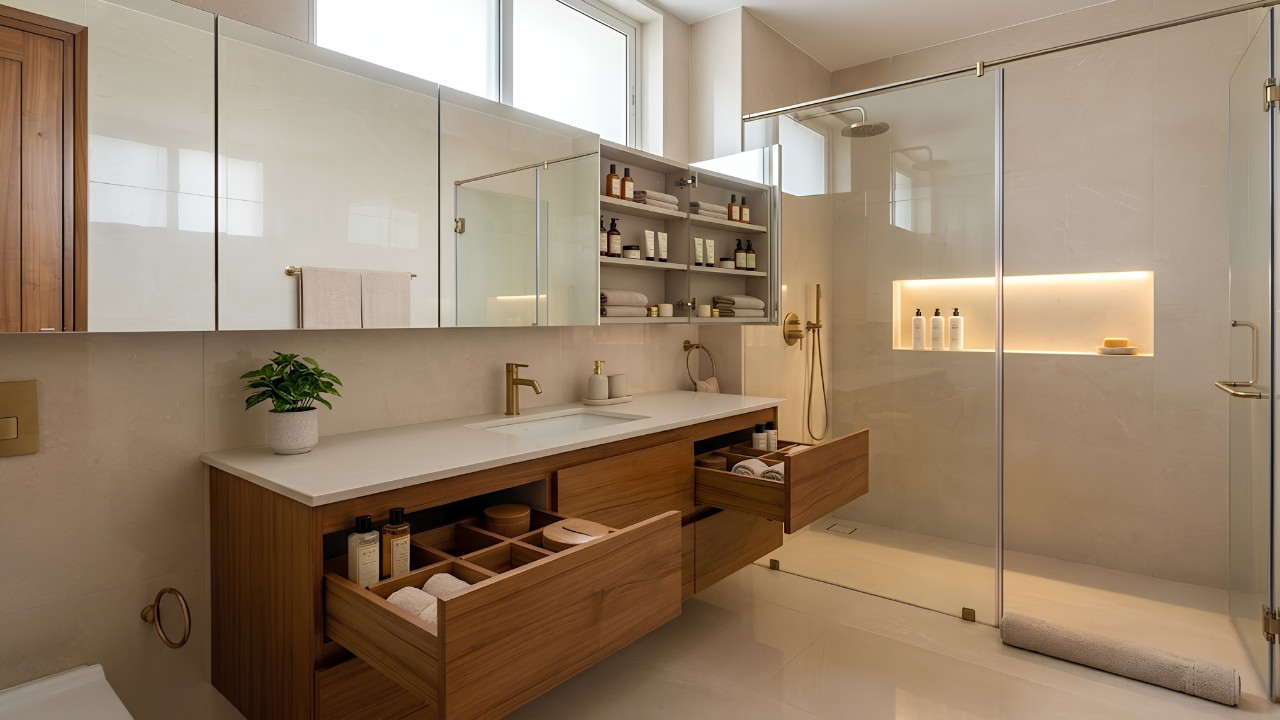
Storage is one of the biggest challenges in Indian bathrooms, particularly in compact urban homes.
Instead of relying entirely on open shelves, designers are using concealed and integrated storage.
Mirrored cabinets, recessed niches, vanity drawers, tall storage units, and built-in shelving can keep toiletries organised without visually cluttering the room.
A recessed shower niche is particularly useful because it provides storage without taking up additional floor space. This approach works especially well in the compact bathrooms typical of 2BHK apartments, which we also cover in our guide to small flat interior design ideas.
11. Walk-In Showers
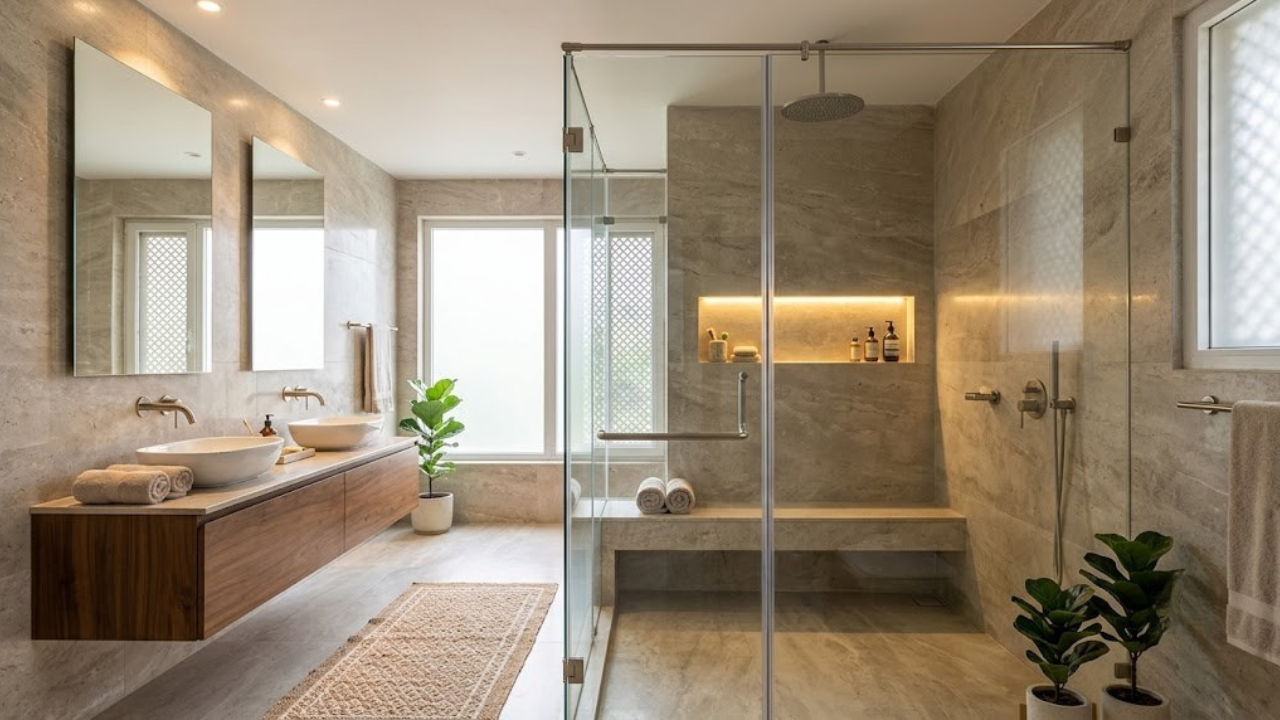
Walk-in showers are becoming a preferred alternative to bulky shower enclosures.
A frameless glass partition can visually separate the wet and dry zones while keeping the bathroom feeling open.
For a more luxurious experience, homeowners can combine rainfall showers with handheld shower systems, built-in niches, bench seating, and concealed drainage.
In compact bathrooms, a carefully planned walk-in shower can make better use of the available space.
12. Curved Bathroom Elements
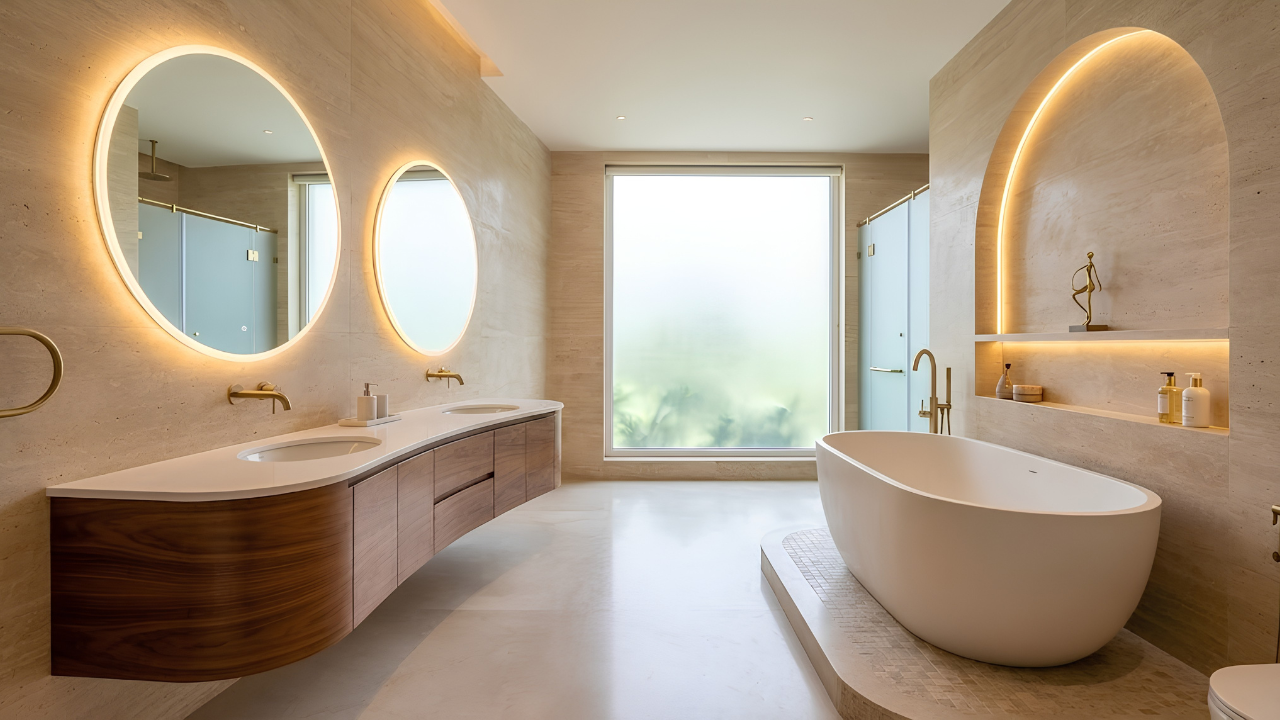
Curves are becoming increasingly popular in contemporary interiors, and bathrooms are no exception.
Rounded mirrors, curved vanities, arched niches, soft-edged countertops, and curved shower partitions can make a bathroom feel more elegant and less rigid.
Curves work particularly well when combined with minimalist surfaces and warm materials.
The key is moderation. One or two curved elements can create visual interest without making the design feel inconsistent.
13. Biophilic Bathroom Design
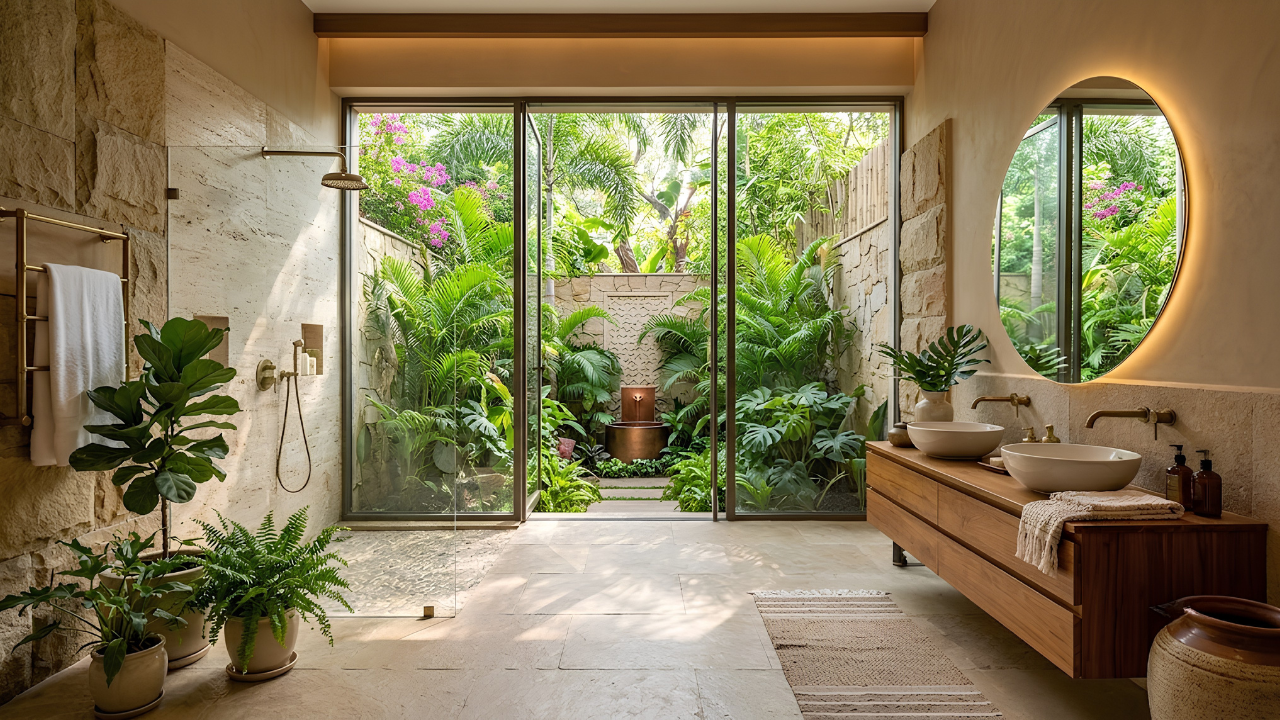
Bringing elements of nature into the bathroom can create a calmer atmosphere.
Indoor plants, natural stone, wood textures, daylight, and garden-facing windows can make the bathroom feel more connected to the outdoors.
Where natural light is limited, carefully selected moisture-tolerant plants and natural-looking materials can still introduce a biophilic character. Our full guide to biophilic design for the home goes deeper into which plants and materials work best in low-light, high-humidity spaces like bathrooms.
For larger homes, a bathroom overlooking a private courtyard or landscaped garden can become a particularly striking feature.
14. Matte Finishes and Brushed Metals
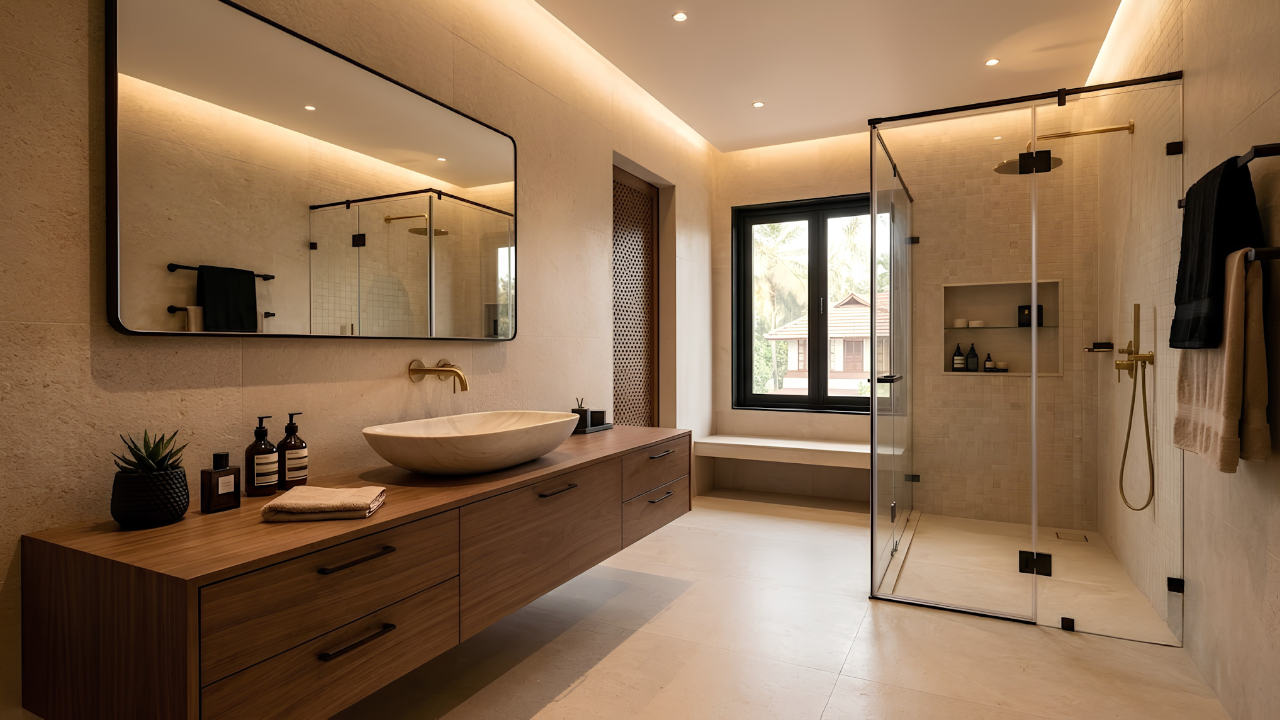
Glossy surfaces are no longer the only way to create a luxurious bathroom.
Matte tiles, matte cabinetry, brushed brass, brushed nickel, gunmetal, and soft black fixtures can create a more refined contemporary appearance.
The right finish depends on the overall colour palette. For example, brushed brass works beautifully with warm beige and stone interiors, while black fixtures can create stronger contrast against lighter surfaces.
15. Personalised Bathroom Design
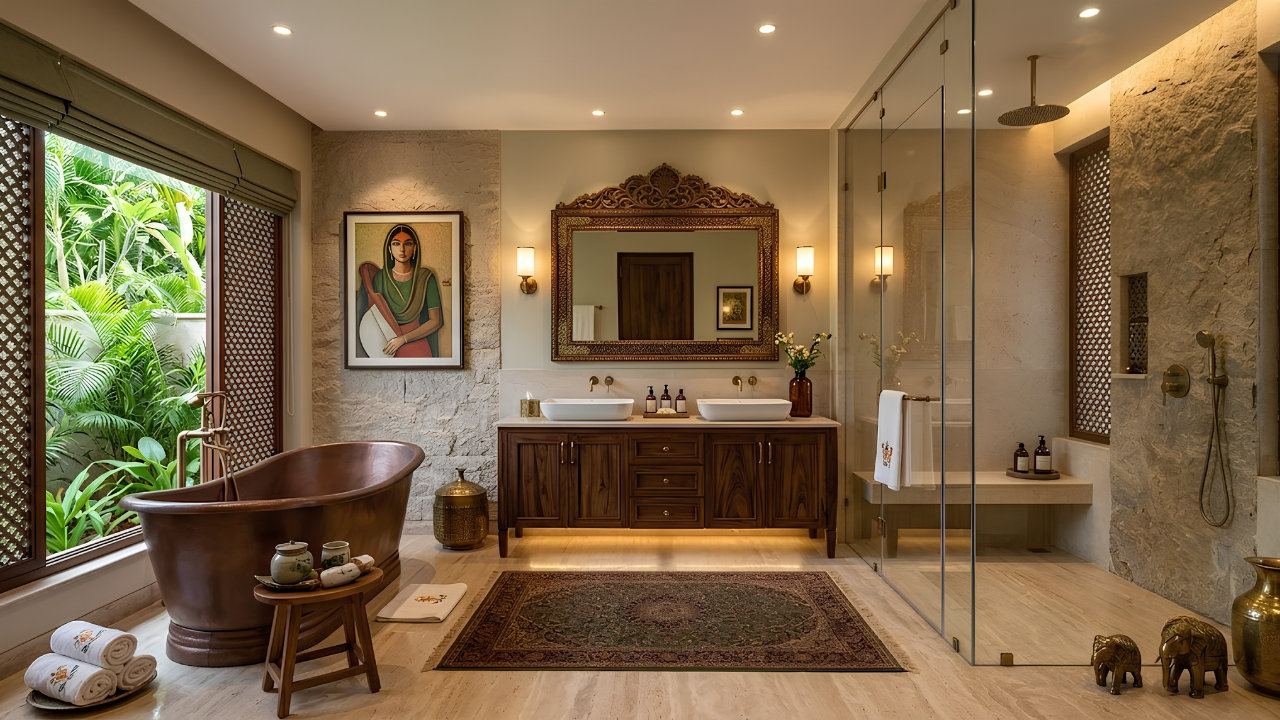
Perhaps the biggest trend for 2026 is personalisation.
Instead of copying a showroom bathroom exactly, homeowners are looking for designs that reflect their lifestyle and preferences.
Someone who enjoys long showers may prioritise a spacious walk-in shower. Another homeowner may prefer a large vanity and extensive storage. A family bathroom may need durable surfaces and practical organisation, while a master bathroom can focus more heavily on luxury and relaxation.
The best bathroom design is therefore not simply the most fashionable one. It is the one that fits the people using it.
Proven Material Palette Combinations
Before buying a single tile or faucet, start with a solid foundational strategy. Evaluate your floor plan, locate existing plumbing shafts, and honestly assess your storage needs. Once the functional layout is locked, commit to a unified material palette, since mixing too many elements can make a space feel chaotic. Here are three combinations that consistently work well in Indian homes.
| Palette | Combination | Best For |
|---|---|---|
| Warm Luxury | Beige travertine-look tiles, walnut wood vanity, brushed brass fixtures | Master bathrooms, spa-style layouts |
| Modern Minimal | Soft grey concrete textures, matte white ceramics, matte black hardware | Compact urban bathrooms, guest bathrooms |
| Natural Retreat | Earthy green accents, natural oak finishes, abundant indoor greenery | Biophilic bathrooms with good natural light |
Bathroom Renovation Cost in India (2026)
Cost depends heavily on the size of the bathroom, whether plumbing lines are being moved, and the grade of tiles, fittings, and fixtures chosen. Here is a realistic range for a full bathroom renovation in Delhi NCR in 2026.
| Category | Approx. Cost | What it Typically Includes |
|---|---|---|
| Basic | Rs 1.5 to Rs 3 lakh | Standard tiles, existing plumbing layout, basic fittings |
| Mid-range | Rs 3 to Rs 6 lakh | Large-format tiles, floating vanity, layered lighting, branded fittings |
| Premium / Spa-style | Rs 6 lakh+ | Natural stone, custom vanity, walk-in shower, smart fittings, layout changes |
Note: These figures cover fittings, tiling, and vanity work. Any structural changes, waterproofing repairs, or moving plumbing shafts are usually quoted separately based on site conditions.
How to Choose the Right Bathroom Design for Your Home
Start with function before style. Understand how the bathroom will actually be used daily before selecting a single finish, and involve a designer early if any plumbing shafts need to move, since this affects cost and timeline significantly.
Once the layout is locked, choose one of the palette combinations above, or work with a designer to create a custom one that matches the rest of your interior design. A bathroom that feels disconnected from the rest of the home rarely feels finished, even if every individual element is well chosen.
Final Thoughts
The bathroom trends of 2026 prove that you do not have to choose between high-end aesthetics and daily functionality. Features like floating vanities, large-format tiles, and layered lighting are transforming standard Indian bathrooms into premium, spa-like retreats that are easier to maintain than ever before.
However, achieving this balance requires technical expertise, from managing plumbing slopes and ventilation to selecting materials that survive local water conditions.
At Studio Rivet, we specialise in this exact intersection of beauty and engineering. Whether you are remodelling a compact urban apartment or designing a sprawling luxury villa, our team is dedicated to crafting bespoke spaces that elevate your everyday living.
Frequently Asked Questions
Design Your Dream Bathroom with Studio Rivet
From compact urban apartments to sprawling luxury villas, we design bathrooms that balance beauty with the engineering that makes them last. Based in DLF Phase 1, Gurugram. Serving Delhi NCR since 2005.
📍 49 Arjun Marg, DLF Phase 1, Sector 26, Gurugram, 122002
📞 +91 9971685572 | 📞 +91 9818491069 | ✉️ info@studiorivet.in
Written by Studio Rivet
Studio Rivet is an architecture and interior design studio based at 49 Arjun Marg, DLF Phase 1, Gurugram. Founded in 2005 by architects Neel Kaul and Akanksha Rathee, we design residential, commercial, hospitality, and institutional spaces across Delhi NCR, from everyday bathrooms to spa-style master suites. Learn more about us →

Top Residential Architects in DLF Phase 1 Gurgaon: A Complete 2026 Guide
If you own a plot in DLF Phase 1 and are planning to build or renovate, choosing the right residenti
Wallpaper vs Paint vs Texture: What Should You Choose?
When it is time to finish your walls, you face a simple but important choice: paint, wallpaper, or t

How to Hire an Architect in India: A Step-by-Step Guide
Building a home, planning a new office, or opening a retail space is one of the biggest milestones i
Leave a Reply