


Other Room Design Ideas



Pooja Room Design Ideas for Modern Indian Homes
The pooja room is the quietest and most personal corner of an Indian home, a space that has to feel sacred without feeling separate from the rest of the house. At Studio Rivet, we design pooja rooms and mandir units in Gurgaon and across Delhi NCR that respect tradition while fitting naturally into contemporary apartments and villas. From marble clad temple walls and brass jaali screens to compact wall mounted mandirs for 2 BHK flats, every design balances Vastu preferences, daily ritual, ventilation and storage.
Browse the curated pooja room interiors below for ideas on placement, materials, lighting and detailing. Whether you want a full standalone pooja room, a niche carved into a passage wall, or an elegant unit that closes away when not in use, these designs can be adapted to your home, your family's rituals and your budget.
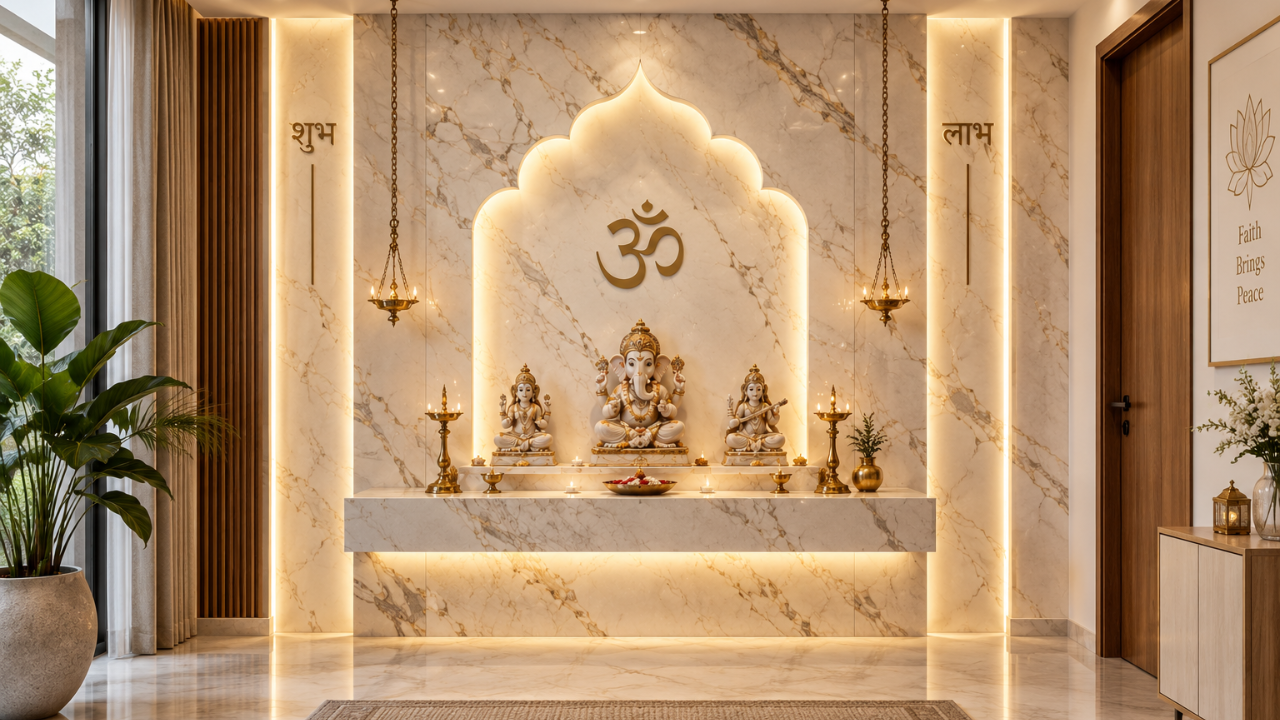
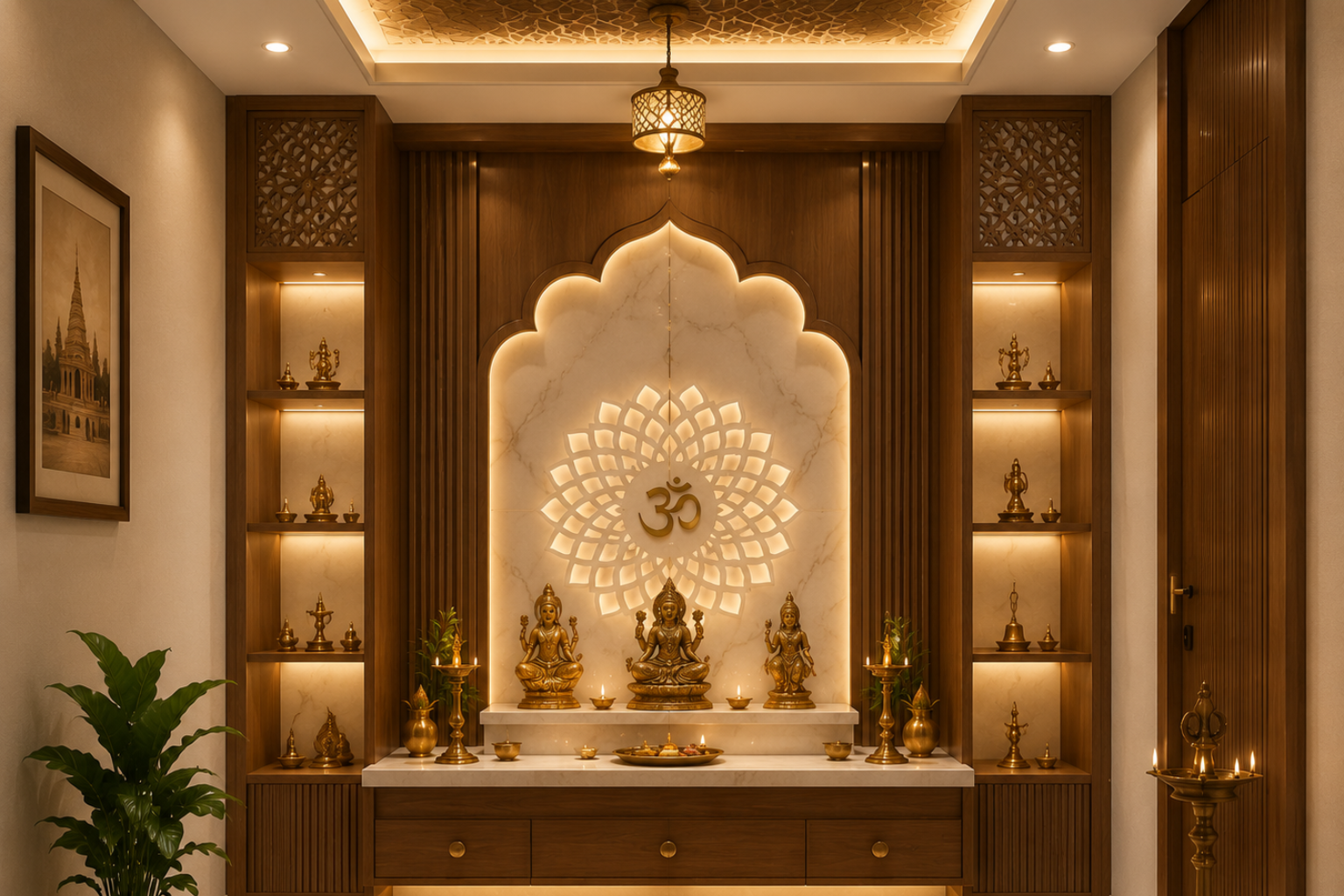
Marble Temple Wall Pooja Room Design
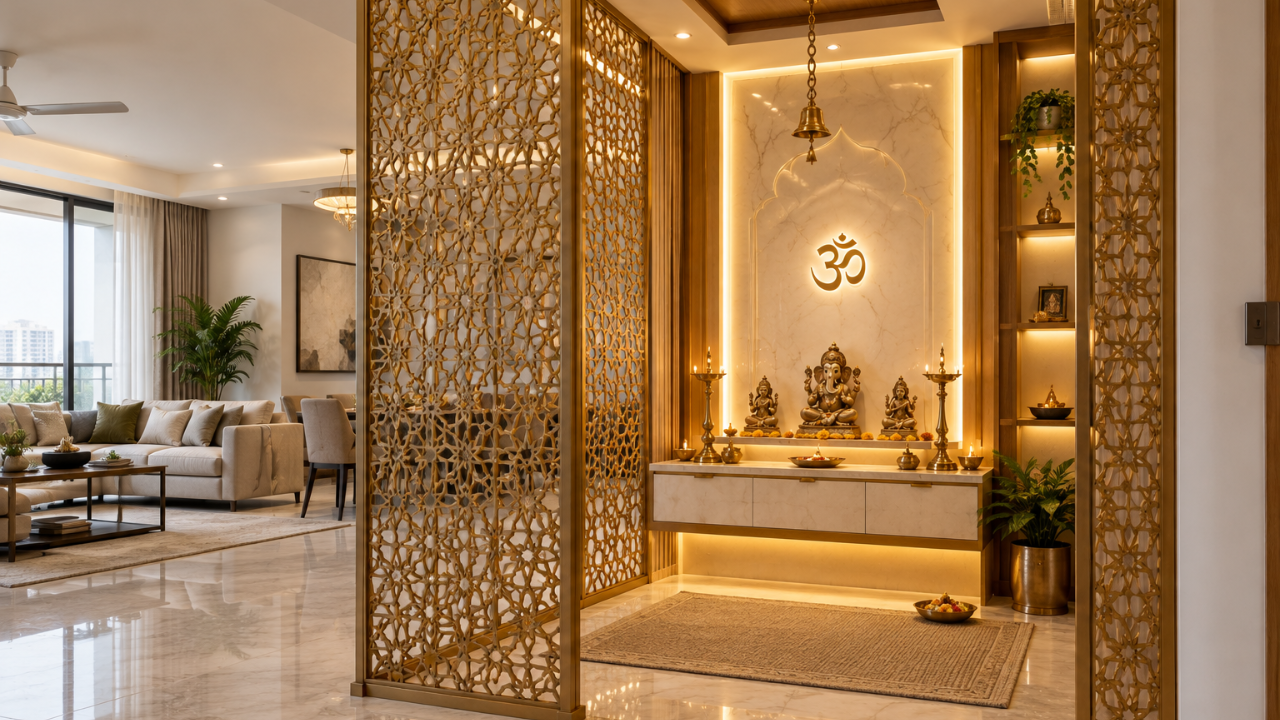
Brass Jaali Partition Pooja Room Design
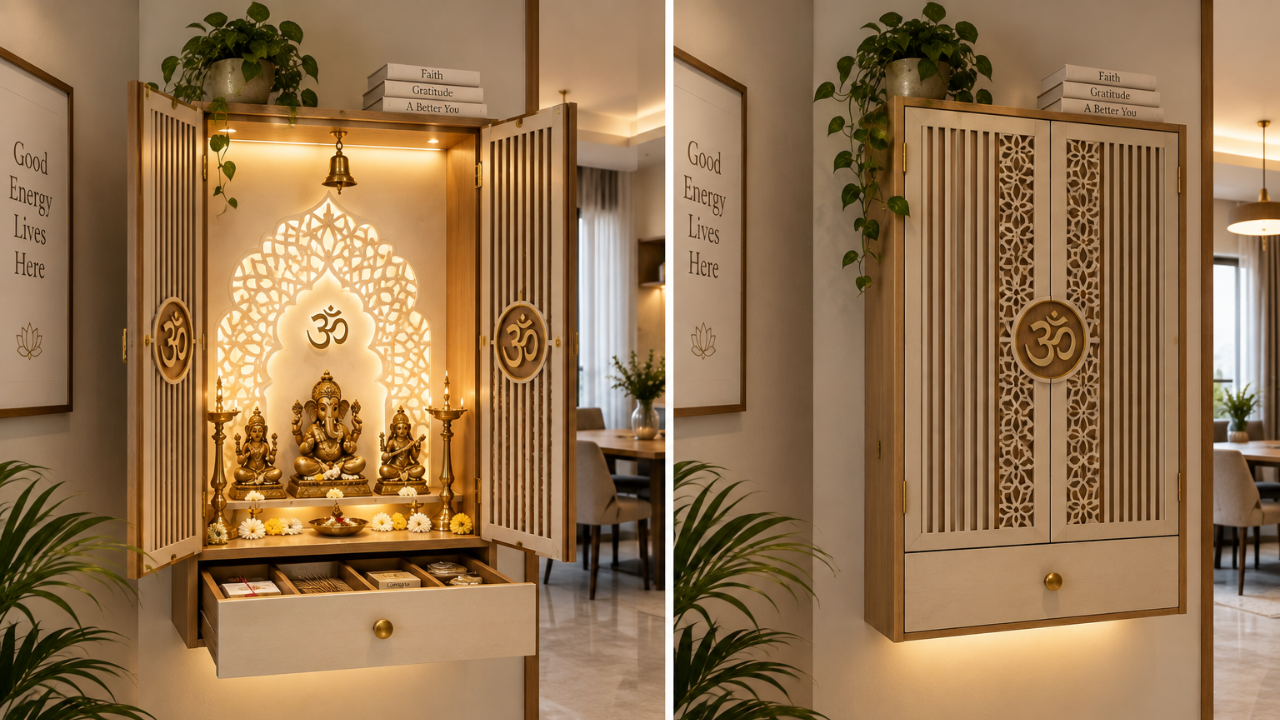
Compact Wall-Mounted Mandir Design
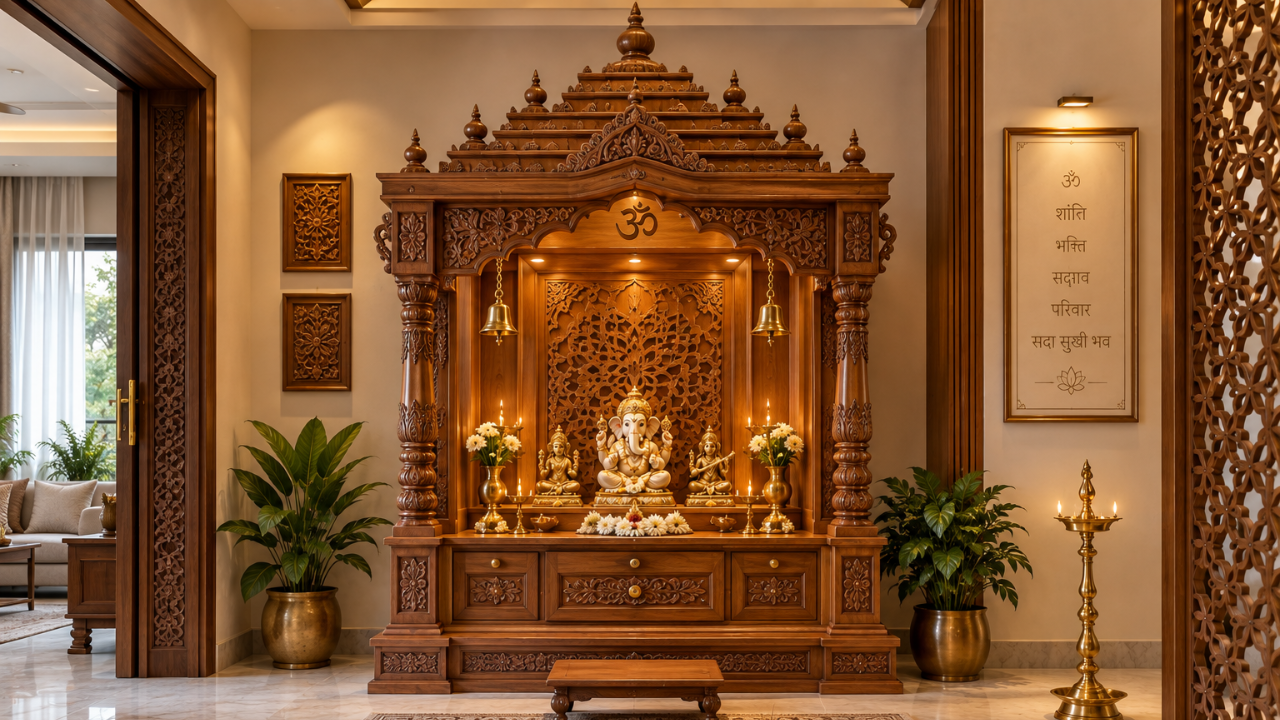
Traditional Carved Wooden Mandir Design
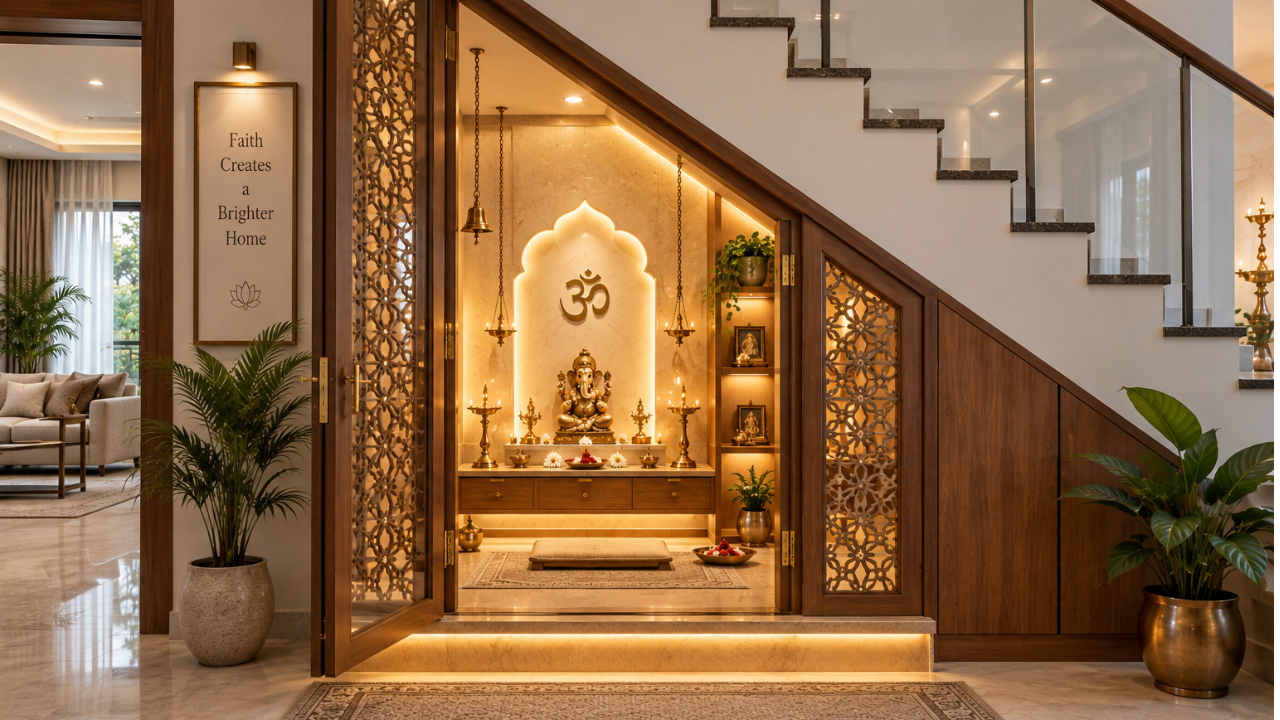
Under-Staircase Pooja Room Design
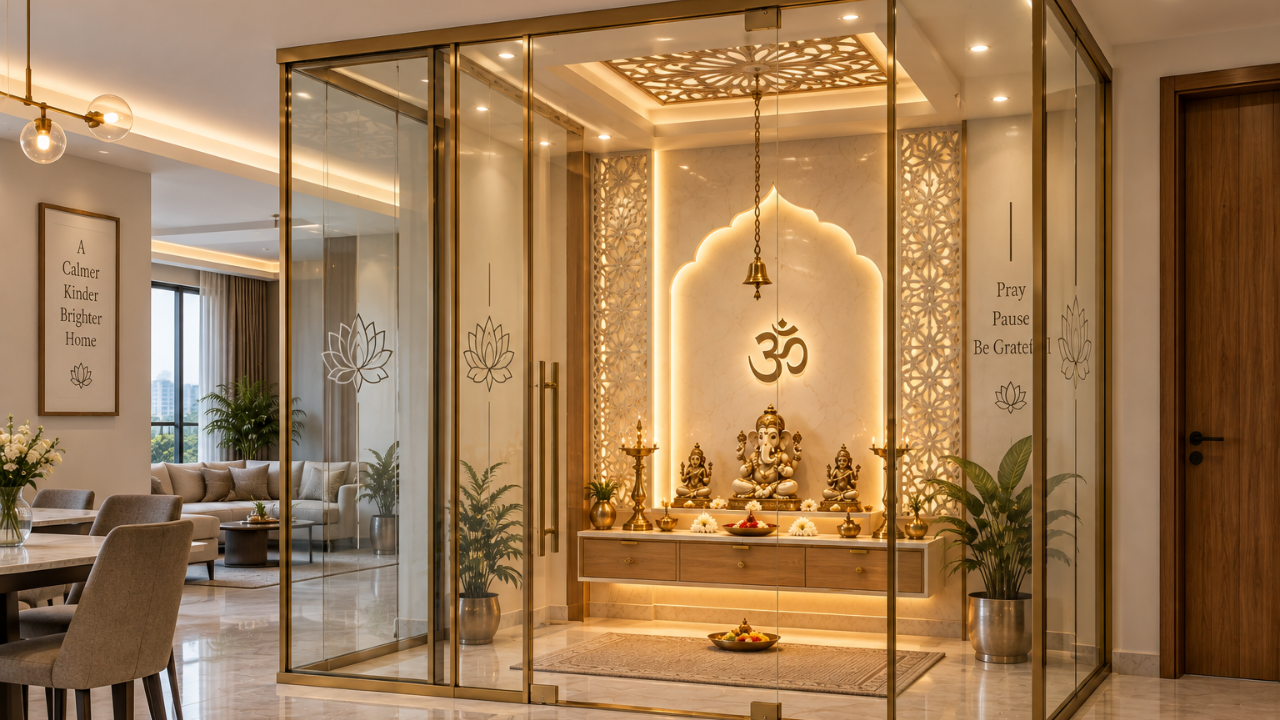
Glass Enclosed Pooja Room Design
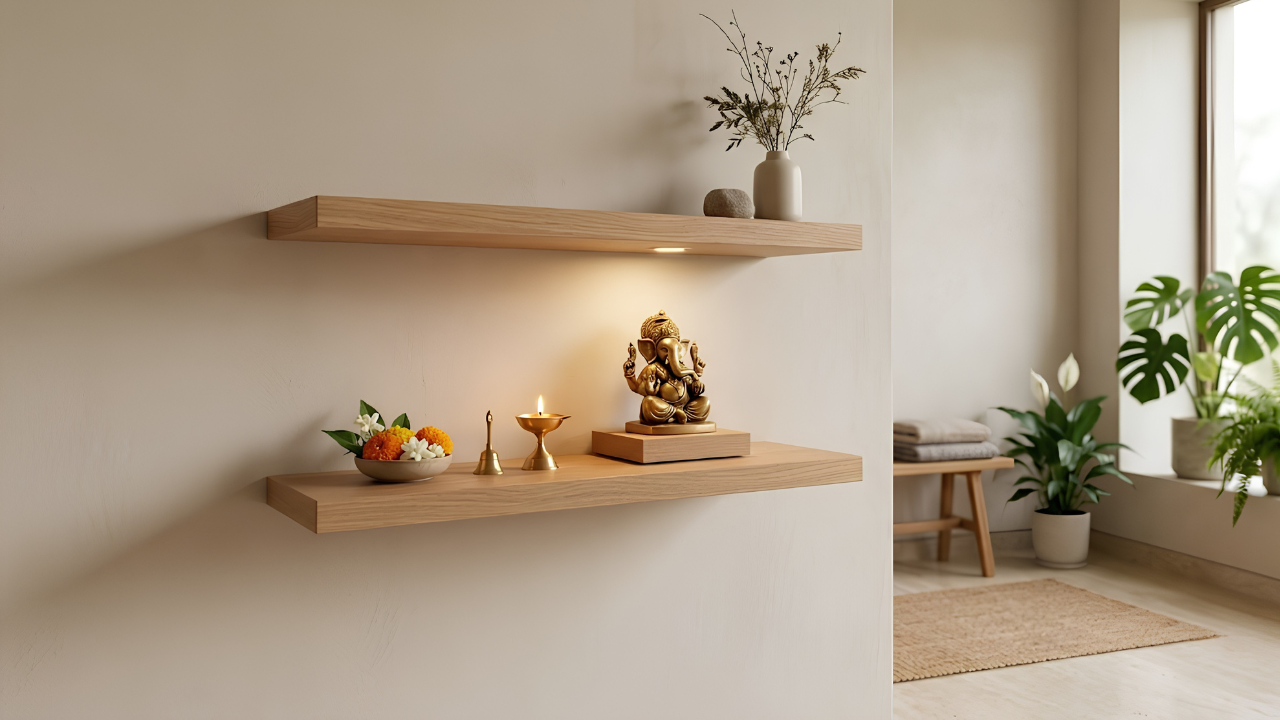
Minimalist Modern Pooja Unit Design

Backlit Onyx Pooja Room Design
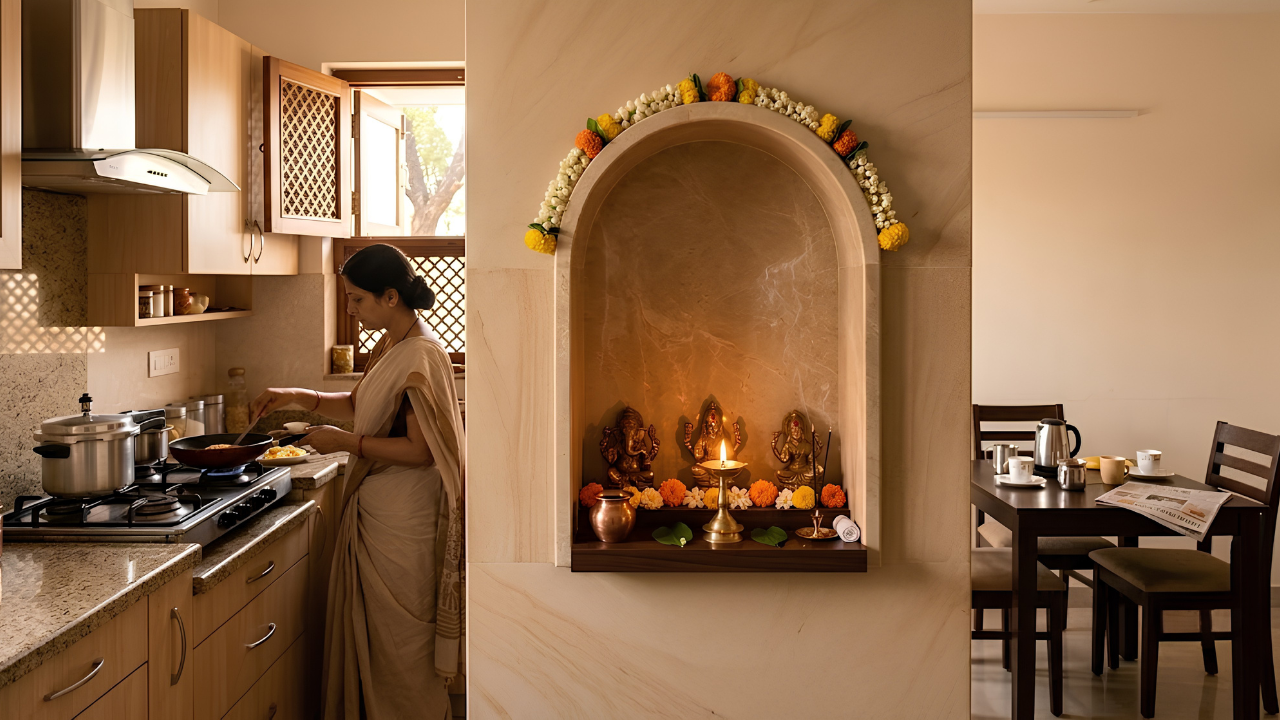
Kitchen-Adjacent Pooja Niche Design
Pooja Room Design Tips
Start With Placement
As per Vastu, the north east or Ishaan corner is traditionally preferred, with the person praying facing north or east. Where the plan does not allow it, the north or east wall of a room is the usual alternative. Avoid placing the mandir against a bathroom wall or directly under a staircase run.
Choose Heat-Safe Materials
Diyas, agarbatti and havan produce real heat and soot. Marble, granite, Kota stone and solid wood handle this well. Keep laminates, veneers and acrylic away from the immediate flame zone, and specify a stain resistant sealer on porous stone.
Light It Warm, Not Bright
Use 2700K warm white LEDs, never cool white. Cove lighting behind the idol, a soft spot from above, and a concealed strip under the platform give depth. Add a dimmer so the same space works for a quick morning prayer and a full evening aarti.
Plan Storage From Day One
Samagri, spare diyas, cotton wicks, ghee, bells and photo frames all need a home. A shallow drawer or a lower cabinet below the platform keeps everything within reach and stops the mandir surface from becoming cluttered within a month of moving in.
Handle Smoke and Ventilation
An enclosed pooja room without airflow traps smoke and stains the ceiling over time. Provide a window, a jaali panel, a small exhaust fan or at minimum a louvred door. This single detail decides whether the room still looks fresh three years later.
Raise the Threshold Slightly
A step or a raised platform of even three to four inches marks the pooja area as distinct from the rest of the home. It keeps the floor cleaner, defines the space without needing walls, and follows a convention most Indian families instinctively expect.
Pooja Room Design FAQs
Ready to Design Your Pooja Room?
Book a free consultation with Studio Rivet and let our team turn these pooja room ideas into a space that fits your home, your rituals and your budget.
Book Free Consultation →