


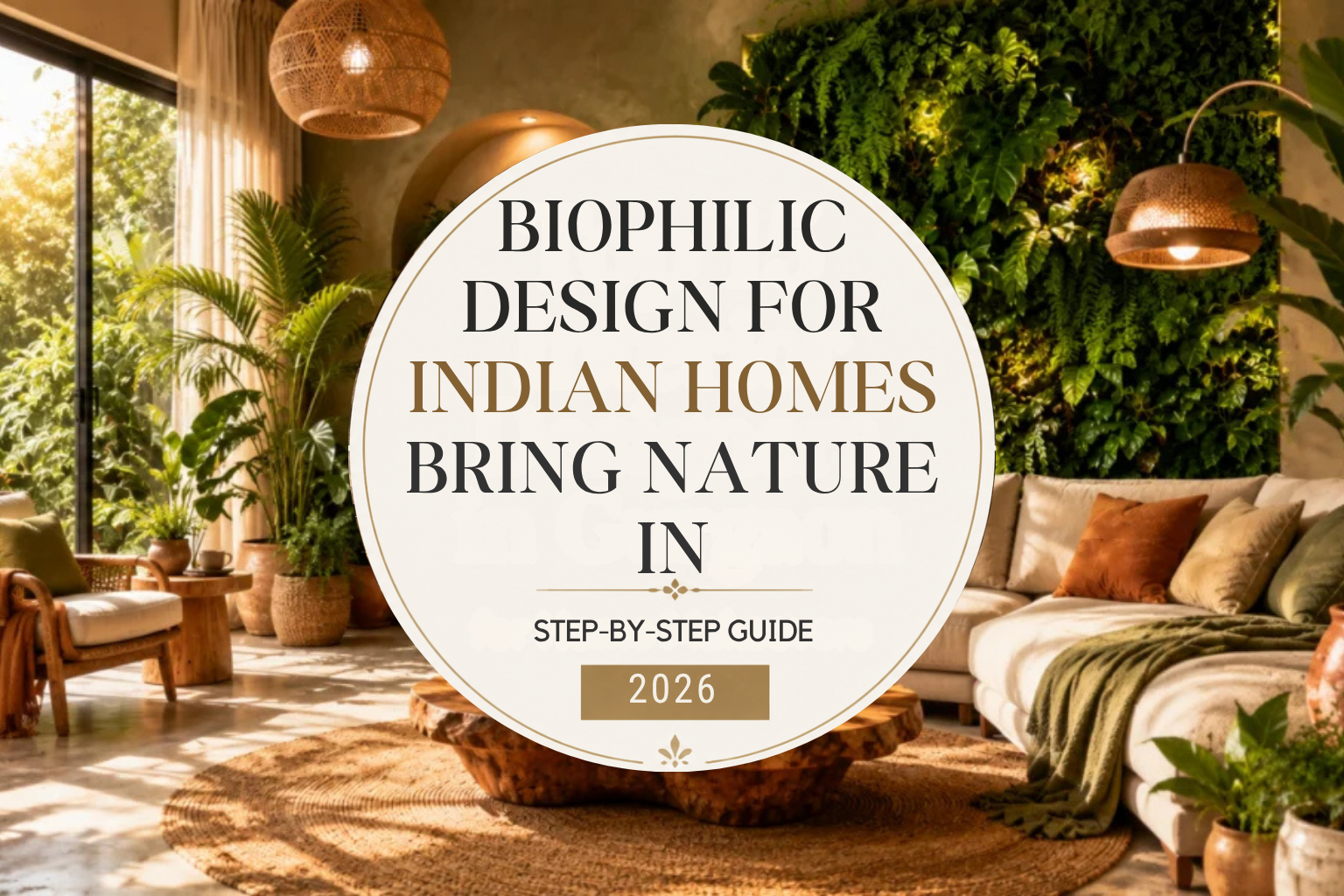
Biophilic Design for Indian Homes: Bring Nature In
We spend most of our day indoors, in flats, offices, and cars, far away from trees, sunlight, and open sky. Biophilic design is the simple idea of bringing that missing piece of nature back into the spaces where we live and work. It is not about turning your home into a jungle. It is about using natural light, plants, wood, stone, water, and fresh air in a thoughtful way so your home feels calm, healthy, and alive.
For Indian homes, this idea fits beautifully. Our traditional houses always had courtyards, verandahs, jaalis, and indoor plants long before the word “biophilic” existed. In this guide, the team at Studio Rivet, an architecture and interior design studio in DLF Phase 1, Gurugram, explains what biophilic design is, why it works, and exactly how to bring nature into every room of your home.
Quick Facts: Nature and Wellbeing at Home
- People in spaces with natural light and greenery report noticeably higher wellbeing and focus in major global workplace studies
- Indoor plants can help improve air quality and add humidity in dry, air-conditioned rooms
- Good daylight supports a healthier sleep and body clock, which matters in city apartments
- Natural materials and views of green can help lower stress and calm the mind
- Biophilic design can start for a few hundred rupees with plants and daylight, and grow from there
In This Article
- What Is Biophilic Design?
- Why It Works So Well in Indian Homes
- The 7 Core Elements of Biophilic Design
- Room by Room: How to Bring Nature In
- Best Indoor Plants for Indian Homes
- Natural Materials That Suit India
- Biophilic Design on a Budget
- Mistakes to Avoid
- Biophilic Design in Gurgaon and Delhi NCR
- Frequently Asked Questions
What Is Biophilic Design?
The word biophilic comes from “biophilia”, which means a natural love for living things. Biophilic design simply takes that idea and builds it into your home. Instead of sealing yourself inside a box of concrete, paint, and artificial light, you let nature back in through light, air, greenery, natural textures, and views of the outdoors.
There are three easy ways to think about it. First, nature in the space, which means real, direct nature like plants, sunlight, water, and breeze. Second, natural materials and patterns, like wood, stone, cane, clay, and shapes inspired by leaves and flowing forms. Third, the feel of nature, like open sightlines, cosy corners, and the changing quality of light through the day. A well designed home uses all three together.
Why Biophilic Design Works So Well in Indian Homes
Indian cities are getting denser, greener spaces are shrinking, and most families now live in apartments. That is exactly why bringing nature indoors matters more than ever. Here is what biophilic design does for an Indian home, in order of the benefits people notice most.
1. It calms the mind and lowers stress. A room with soft daylight, a few plants, and natural wood simply feels more relaxing than a hard, artificial space. After a stressful commute in Delhi NCR traffic, coming home to a calm, green space makes a real difference.
2. It improves indoor air and comfort. Indian homes deal with dust, pollution, and long air-conditioned hours. Plants, cross ventilation, and natural materials help freshen the air and balance dryness, making rooms more pleasant to breathe in.
3. It supports better sleep and energy. Good natural light during the day helps set your body clock, so you feel awake in the morning and sleepy at night. This is a quiet but powerful benefit in closed city flats.
4. It keeps homes cooler and greener. Shaded windows, plants, courtyards, and light-coloured natural finishes reduce heat build up in our hot summers, which can also lower your cooling bills.
5. It connects you to the seasons. Watching daylight shift, plants grow, and breeze move through the home brings a sense of calm and grounding that no gadget can match.
The 7 Core Elements of Biophilic Design
You do not need all seven at once. Even two or three, done well, will transform how a room feels. Here is a simple ranking from the easiest and most affordable to the most involved.
| Element | What It Means | Effort |
|---|---|---|
| Natural Light | Big windows, sheer curtains, mirrors, skylights | Low to Medium |
| Indoor Plants | Potted plants, hanging planters, herb pots | Low |
| Natural Materials | Wood, stone, cane, jute, clay, cotton, linen | Medium |
| Fresh Air and Breeze | Cross ventilation, openable windows, jaalis | Medium |
| Earthy Colours and Patterns | Greens, browns, terracotta, leaf and flowing shapes | Low to Medium |
| Views of Nature | Framed outdoor views, balcony gardens, indoor greens | Medium |
| Water and Green Walls | Small fountains, water bowls, vertical green walls | High |
Room by Room: How to Bring Nature Into Your Home
The best way to plan biophilic design is one room at a time. Here is how to add nature to each space, with links to more detailed design ideas for every room.
Living Room
The living room is where the family gathers, so make it the heart of your green home. Place a tall statement plant like an areca palm or rubber plant near a window, add a jute or wool rug, and choose a wooden coffee table. Keep the curtains sheer so daylight fills the room. A textured stone or wood feature wall behind the sofa instantly adds a natural, boutique-hotel feel. For more ideas, see our living room design ideas, including a modern biophilic living room layout.
Bedroom
The bedroom should feel restful, so keep it soft and simple. Use warm neutral colours, cotton and linen bedding, a wooden or cane headboard, and one or two low-maintenance plants like a snake plant that is happy in low light. Let in morning light to help you wake up naturally. Browse our bedroom design ideas for organic modern and Japandi styles that fit this approach perfectly.
Kitchen
Kitchens are ideal for a small edible garden. Grow tulsi, mint, curry leaves, or coriander on the windowsill or a small vertical rack. Add wooden chopping boards, cane baskets for storage, and a stone or wood-look countertop for warmth. Good ventilation keeps the space fresh. Explore our modular kitchen design ideas to plan a layout that leaves room for greenery.
Bathroom
Bathrooms in India are often humid, which many plants love. Add a peace lily or a pothos, use natural stone tiles or stone-look finishes, and bring in a wooden stool or bath tray. A frosted window or skylight for daylight makes the space feel like a spa. See our bathroom design ideas for calming, nature-inspired looks.
Dining Room
A dining space feels warmer with a solid wood table, cane or upholstered chairs, and a low bowl of fresh greenery or a small plant as the centrepiece. Keep the lighting soft and warm for relaxed meals. Our dining room design ideas show how natural materials make everyday meals feel special.
Home Office
Working from home is much easier in a green, well-lit corner. Place your desk near a window, add a small plant beside your screen, choose a wooden desk, and use a natural-fibre rug to soften sound. A view of greenery, even a balcony plant, helps you focus and feel less tired. Take a look at our home office design ideas, including a biophilic sanctuary workspace.
Want to see all rooms together? Browse our full collection of interior design ideas for inspiration across the whole home.
Best Indoor Plants for Indian Homes
The right plant depends on how much light and care you can give it. Here are reliable, easy-to-find plants that thrive in Indian conditions.
| Plant | Light Needed | Care Level | Best For |
|---|---|---|---|
| Money Plant (Pothos) | Low to Medium | Very Easy | Shelves, hanging planters, beginners |
| Snake Plant | Low | Very Easy | Bedrooms, dark corners |
| Areca Palm | Bright, indirect | Medium | Living room statement plant |
| Peace Lily | Low to Medium | Easy | Bathrooms, humid spaces |
| Rubber Plant | Bright, indirect | Easy | Corners, bold green accent |
| Tulsi and Herbs | Bright | Easy | Kitchen window, balconies |
Tip: Group three plants of different heights together for a fuller, more natural look than single scattered pots.
Natural Materials That Suit Indian Homes
Materials are where biophilic design quietly does most of its work. The goal is to reduce shiny, plastic, and fully synthetic surfaces and replace them with textures that come from nature.
For furniture and finishes, solid or engineered wood in teak, oak, or walnut tones adds instant warmth. Cane and rattan are light, breezy, and very Indian in feel. Natural stone like marble, kota, or granite works for floors, counters, and feature walls, and stays cool in summer. For soft furnishings, choose cotton, linen, jute, and wool over fully synthetic fabrics, so the room feels and breathes better.
You do not have to use expensive solid materials everywhere. Good quality wood-look and stone-look laminates and tiles give a similar natural feel at a lower cost, which is a smart, practical choice for many Indian homes.
Biophilic Design on a Budget
One of the best things about this style is that you can start today for very little. Begin with the affordable steps and add bigger features over time.
Start small (a few hundred to a few thousand rupees): add three or four indoor plants, swap heavy dark curtains for light sheer ones, add a jute rug, and place a few cane baskets for storage. These four changes alone shift the whole mood of a room.
Mid-range upgrades: introduce a wooden or stone feature wall, replace synthetic upholstery with cotton and linen, and add warm, layered lighting that mimics natural light through the day.
Bigger investments: plan a green wall, a small indoor water feature, a courtyard, a skylight, or larger windows during a full renovation. These are best designed from the start with an architect, so light, air, and greenery are built into the plan rather than added on later.
Common Biophilic Design Mistakes to Avoid
These are the slip-ups our design team sees most often, and each one is easy to prevent.
Mistake 1: Buying plants you cannot maintain
A row of dying plants looks worse than no plants at all. Match the plant to the light your room actually gets and to how much time you can spend on care. Start with hardy varieties like money plant and snake plant.
Mistake 2: Blocking your natural light
Heavy dark curtains, tall furniture in front of windows, and dark wall colours cancel out the daylight you already have. Keep windows clear and use light, sheer fabrics.
Mistake 3: Using only fake plants and plastic
A few good artificial plants are fine in dark corners, but a room full of plastic greenery misses the point. Real plants, real wood, and real textures are what make biophilic design work.
Mistake 4: Treating it as decoration only
The strongest biophilic homes plan light, airflow, and views from the beginning, not just as a plant added at the end. This is why it is best to think about it during design, alongside your layout and lighting.
Biophilic Design in Gurgaon and Delhi NCR
In Gurgaon, Delhi, Noida, and Faridabad, most people live in apartments and high-rise towers, where outdoor green space is limited, and pollution is a real concern. This makes indoor nature even more valuable. Balcony gardens, green corners, daylight-friendly layouts, and natural materials help city homes feel healthier and calmer.
At Studio Rivet, we build these ideas into our projects from the ground up, whether it is a low-rise home, a high-rise apartment, or a full interior design project. We plan window positions, cross ventilation, shaded openings, and planting zones so nature becomes part of the architecture, not an afterthought.
The same thinking makes commercial and public spaces better too. Our work in hospitality architecture and institutional architecture often uses daylight, greenery, and natural materials to make hotels, cafes, and campuses feel welcoming and human. To see how we push design further, explore our experimental design work.
Frequently Asked Questions
Bring Nature Into Your Home with Studio Rivet
We design homes where daylight, air, greenery, and natural materials are built into the plan from day one. Based in DLF Phase 1, Gurugram. Serving Delhi NCR since 2005.
📍 49 Arjun Marg, DLF Phase 1, Sector 26, Gurugram, 122002
📞 +91 9971685572 | 📞 +91 9818491069 | ✉️ info@studiorivet.in
Written by Studio Rivet
Studio Rivet is an architecture and interior design studio based at 49 Arjun Marg, DLF Phase 1, Gurugram. Founded in 2005, we design residential, commercial, hospitality, and institutional spaces across Delhi NCR, with a focus on light, comfort, and a strong connection to nature. Learn more about us →

Luxury Interior Design in Gurgaon | Villas & Penthouses
A villa in South City or a penthouse overlooking Golf Course Road is not just a bigger home. It come

Small Flat Interior Design Ideas for 2BHK in Gurgaon
A 2BHK flat in Gurgaon is one of the most common and most challenging interior design briefs we rece

From Concept to Construction: The Journey of a Visionary Architectural Design
Architectural projects begin with an idea. Sometimes it comes from a client’s need, sometimes from
Leave a Reply