


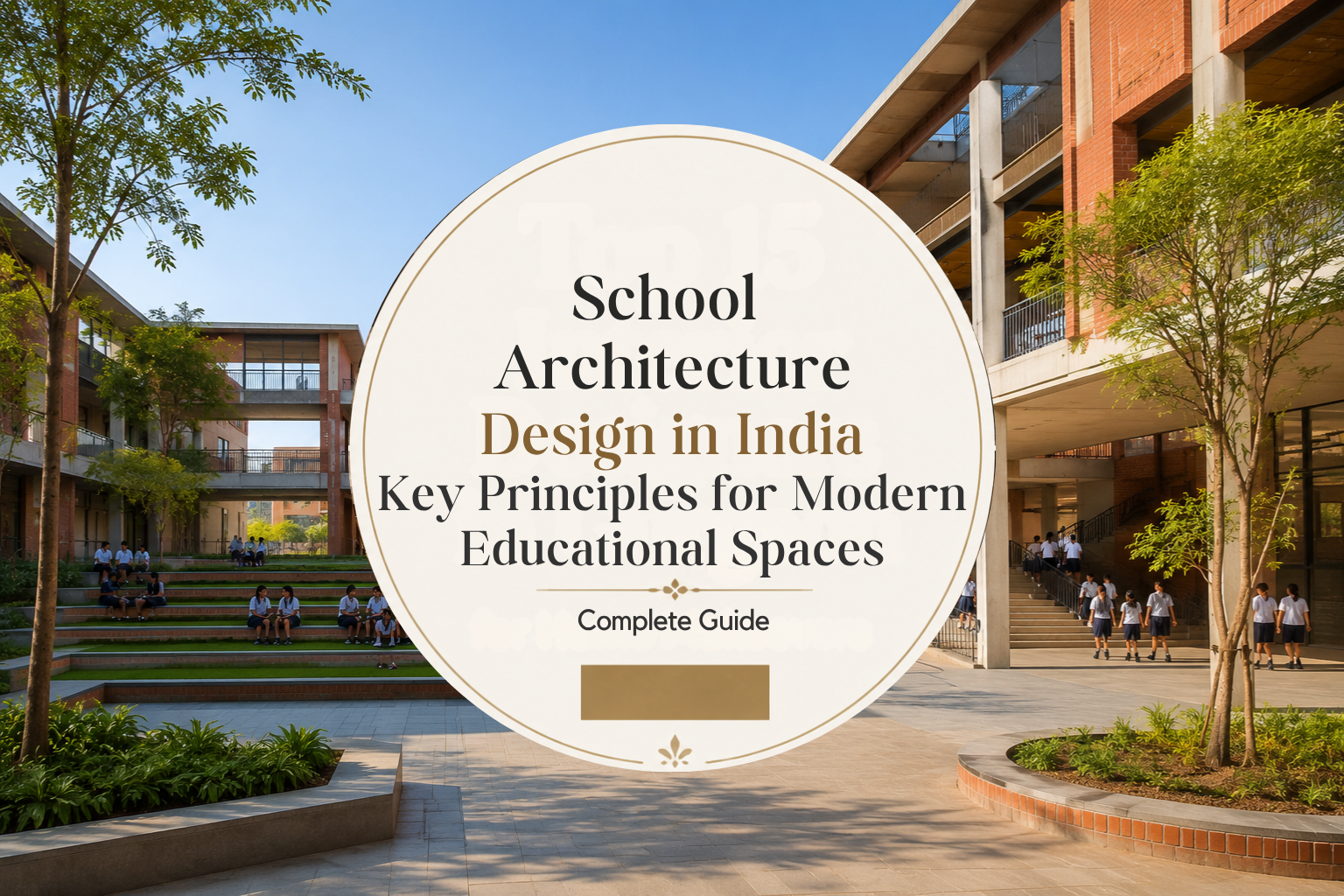
School Architecture Design in India: Key Principles for Modern Educational Spaces
Educational spaces are no longer just brick-and-mortar structures with rows of desks and a blackboard. Today, they are dynamic, living ecosystems that actively participate in a child’s developmental journey. With changing educational frameworks, digital integration, and progressive pedagogies, the approach to school architecture design in India is undergoing a massive transformation. Modern institutions are shifting away from the rigid, factory-style layouts of the past and embracing vibrant, flexible, and sustainable learning environments.
Designing a school in India comes with a unique set of opportunities and challenges. Architects must balance rich cultural heritage and diverse climatic conditions with international educational standards and strict safety guidelines. Whether you are an educational trust building a new campus or renovating an existing institutional wing, understanding the core principles of institutional design is vital to creating spaces that foster creativity, collaboration, and cognitive growth.
The Evolution of Educational Spaces in India
To understand where institutional design is heading, we must first look at where it started. Historically, Indian education thrived in open-air settings such as the Gurukul system, which emphasized a deep, physical connection with nature. During the colonial era, this system made way for highly structured, compartmentalized classrooms designed for passive, teacher-led instruction.
Today, the shift is moving back toward holistic, experiential learning. With the introduction of the National Education Policy 2020, there is a strong emphasis on activity-based learning, multi-disciplinary studies, and collaborative problem-solving. Consequently, modern institutional architecture must mirror these academic shifts. Classrooms are no longer isolated boxes. Instead, they are fluid environments that encourage movement, peer-to-peer communication, and practical discovery.
Key Principles of School Architecture Design in India
Creating an exceptional educational campus requires a blend of form, function, and psychology. Below are the key principles that define successful school architecture design in India today.
1. Flexibility and Multi-Purpose Spaces
The traditional model of one classroom hosting one subject for the entire day is quickly becoming obsolete. Modern educational spaces must be highly adaptable, which is why modern school architecture design in India emphasizes learning landscapes over rigid floor plans. Sliding partitions, modular furniture, and wide corridors that double as collaborative zones allow teachers to reconfigure spaces within minutes.
For instance, a single large hall can function as a lecture room in the morning, a group-study area in the afternoon, and an exhibition space in the evening. Corridors are no longer just transitional passages. By adding bay windows, casual seating, and low-height writing walls, corridors transform into vibrant hubs where informal learning takes place naturally.
2. Safety, Security, and Inclusivity
In any educational institution, student safety is the absolute priority. A well-designed school campus manages security through intelligent spatial planning rather than sterile, jail-like barriers. This involves segregating vehicular and pedestrian traffic at the entrance gates to prevent accidents during busy drop-off and pick-up hours.
Furthermore, internal layouts must ensure clear sightlines. Eliminating dark corners and designing open, visible courtyards allows for natural, passive supervision by staff members. Inclusivity is equally critical. Modern Indian schools must be universally accessible, complying with barrier-free design standards. This means installing ramps with gentle slopes, tactile flooring for the visually impaired, braille signage, and dedicated, fully accessible washrooms on every floor.
3. Biophilic Design and Connection with Nature
Biophilic design, the practice of connecting building occupants closely with nature, has been proven to reduce stress, improve attention spans, and enhance overall well-being. Incorporating this principle is highly effective in Indian schools, where long hours indoors can lead to fatigue.
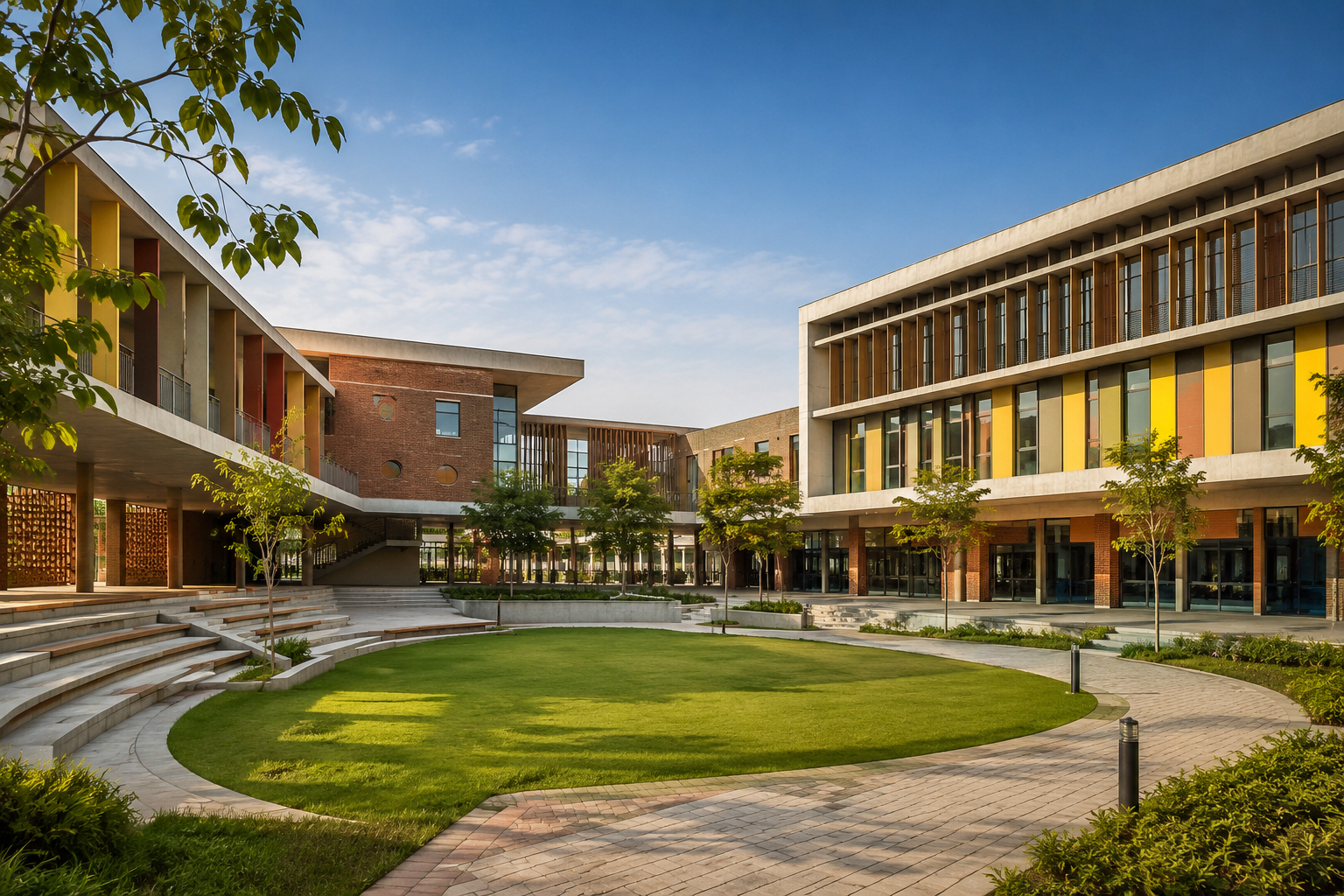
Architects achieve this by integrating central courtyards, which have been a staple of traditional Indian architecture for centuries. Courtyards bring natural daylight and fresh air deep into the building core, reducing the reliance on artificial lighting and mechanical ventilation. Additionally, incorporating herbal gardens, vertical green walls, and outdoor learning decks provides students with hands-on environmental education opportunities while purifying the ambient air.
4. Sustainability and Thermal Comfort
Green building practices are no longer optional. Designing a sustainable school is a critical consideration in school architecture design in India, given the country’s diverse and often extreme weather conditions. From cold Himalayan regions to the scorching plains of Northern and Western India, buildings must adapt to their local environment.
Using passive solar design is one of the most effective ways to ensure thermal comfort. By orienting classrooms to maximize glare-free northern light and minimizing harsh southern and western solar heat gain, architects can keep interiors naturally cool. Employing fly-ash bricks, local stones like Kota or Jaisalmer sandstone, rainwater harvesting systems, and rooftop solar panels drastically reduces the institution’s carbon footprint and long-term operating costs.
5. Advanced Technology Integration
Modern classrooms are hybrid hubs where physical and digital learning coexist. Integrating technology requires careful planning from the structural skeleton stage. Classrooms need robust electrical layouts, concealable wire management systems, and strategically placed power outlets to support smart boards, projectors, and individual student devices.
Acoustic design is also deeply tied to technology integration. As virtual lectures and multimedia presentations become standard, classrooms must be acoustically insulated to prevent sound transmission between rooms. Using acoustic ceiling tiles, perforated wall paneling, and double-glazed windows ensures that every child can hear the instructor clearly, whether they are sitting in the front row or the back.
6. Color Psychology and Age-Appropriate Interiors
Color has a profound impact on human behavior, mood, and cognitive performance. When designing school interiors, a one-size-fits-all approach does not work. The color palette must change according to the developmental stage of the students using the space.
For pre-primary and primary sections, vibrant, warm colors like soft yellow, orange, and pastel green stimulate creativity, curiosity, and playfulness. For middle and high school sections, calmer tones like blues, teals, and light grays are preferred to reduce anxiety, promote concentration, and create a mature, focused study environment. The physical scale of furniture, window sills, and door handles must also be customized to match the average height and ergonomic needs of each age group.
Overcoming Regional and Climatic Challenges in Indian Institutional Architecture
India’s geographical diversity means that what works for a school in the cool hills of Shimla will fail miserably in the hot, humid climate of Chennai. To implement successful school architecture design in India, architects must understand the microclimatic realities of the specific region.
In hot-dry zones, features like deep window overhangs, double-skin facades, and traditional jaali screens are highly beneficial. Jaalis act as decorative elements while filtering harsh sunlight and dust, cooling the incoming air through the Venturi effect. In warm-humid zones, cross-ventilation is paramount, requiring open layouts, high ceilings, and large window openings placed strategically to catch prevailing wind currents.
For institutional developers aiming to balance international design standards with local functional needs, partnering with an experienced Architect & Interior Designer in Gurgaon, like Studio Rivet ensures that every square foot is planned meticulously to foster academic excellence while remaining fully compliant with structural safety guidelines.
The Impact of Well-Designed Spaces on Student Learning Outcomes
Physical environments are silent educators. Research continuously shows that students in well-ventilated, naturally lit, and aesthetically pleasing classrooms perform significantly better academically than those in dark, cramped, and poorly insulated spaces.
When a school features open communal zones, students are more likely to interact across different age groups, building empathy and social skills. When classrooms have flexible furniture, teachers can seamlessly switch from individual quiet reading to high-energy group presentations, keeping students engaged and active. Investing in thoughtful institutional architecture is ultimately an investment in the cognitive, emotional, and social development of our future generations.
Frequently Asked Questions
Ready to bring your architectural vision to life?
Studio Rivet is an integrated architecture and interior design studio based in DLF Phase 1, Gurugram. We have been doing both together since 2005 for residential, commercial, hospitality, and institutional projects across Delhi NCR.
49 Arjun Marg, DLF Phase 1, Sector 26, Gurugram 122002
+91 9971685572 | +91 9818491069 | info@studiorivet.in
Work With Studio Rivet
Designing an educational institution requires a thoughtful balance of aesthetics, safety, utility, and future-ready infrastructure. As a premier architect and interior designer in Gurgaon, Studio Rivet brings years of experience, meticulous craftsmanship, and sustainable practices to every commercial and institutional project. We turn empty structures into vibrant, inspiring spaces where future generations can thrive.
Ready to bring your architectural vision to life? Book a Free Consultation with our design experts today.
Call +91 9971685572 or visit Studio Rivet to explore our complete portfolio of exceptional design solutions.

Best Wall Colours for Homes (Room by Room Guide)
Paint is the cheapest and fastest way to change how your home feels, yet it is the one decision peop
Modular Kitchen Design: L-Shape vs U-Shape vs Parallel – Complete 2026 Guide
Choosing the right modular kitchen design is one of the most consequential decisions in any Indian h

Open Plan Office Interior Design Ideas for Startups: Complete 2026 Guide
The best office interior design ideas for a startup are not the most expensive or the most Instagram
Leave a Reply