


10 Vastu Tips for Home Entrance – Direction, Colours & Doors (2026 Guide)
In almost every Indian home we visit Studio Rivet, one of the first questions a family asks us is, "Is our main entrance Vastu-compliant?" And honestly, it is a very fair question. In Indian culture, the main entrance of a home is not just a door. It is the face of the house. It is where good energy enters, where Lakshmi is welcomed, where guests form their first impression. Getting it right matters both spiritually and practically.
The good news? Vastu for the main entrance is not complicated. You do not need to break walls or spend lakhs on changes. Most Vastu corrections for the entrance are simple, affordable, and something you can implement this weekend. In this guide, we share 10 practical Vastu tips written in plain, simple language that actually work for modern Indian homes in 2026.
A quick note before we start: Vastu Shastra is a traditional Indian system of architecture and spatial design that has guided home construction for thousands of years. At Studio Rivet, we respect Vastu deeply and integrate it into our residential projects whenever our clients wish. We do not treat it as superstition; we treat it as design wisdom, much of which aligns well with modern principles of light, airflow, and space planning.
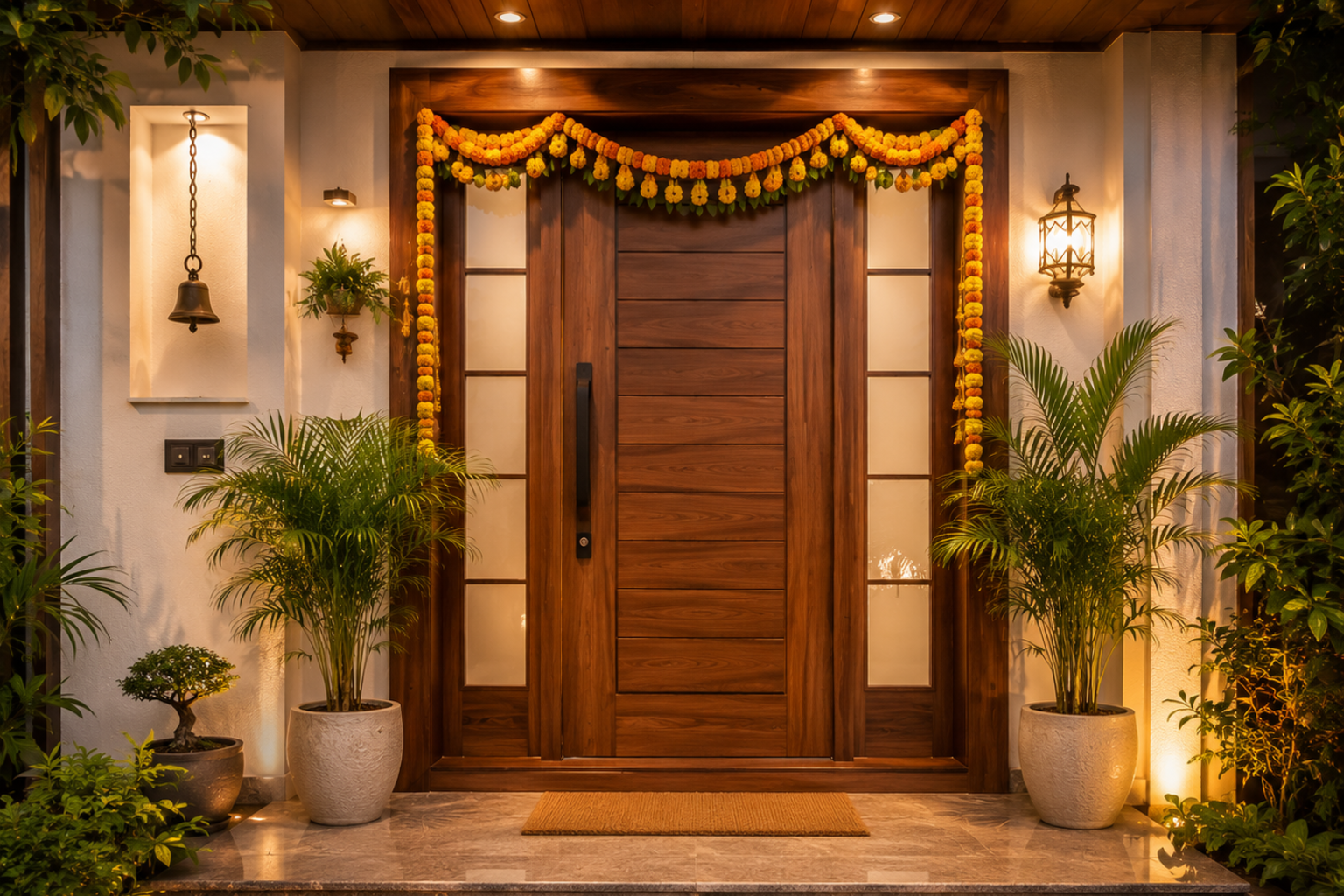
Beautiful Indian home main entrance with wooden door, nameplate, toran, and potted plants
Why Is the Main Entrance So Important in Vastu?
Think of your home as a living body. The main entrance is the mouth; it is through the entrance that energy (called prana in Vastu) enters your home. If the entrance is blocked, dark, cluttered, or wrongly placed, the energy entering your home is affected. On the other hand, a well-designed entrance allows fresh, positive energy to flow in freely, and this, Vastu says, directly influences the health, wealth, relationships, and happiness of the people living inside.
Even from a purely practical standpoint, ignoring Vastu for a moment, think about how you feel when you walk into a home with a dark, cramped, shoe-scattered entrance versus one that is bright, clean, and welcoming. The feeling is completely different. Vastu for the main entrance is essentially the ancient science of creating that second type of entrance every time.
The 10 Vastu Tips for Home Entrance
Tip 1: Choose the Right Direction for Your Main Door
This is the most important Vastu decision for any home. The direction your main door faces determines which energies flow into your home throughout the day.
| Entrance Direction | Vastu Verdict | Associated With |
|---|---|---|
| North | Excellent ✓ | Wealth, career growth, prosperity ruled by Kuber |
| East | Excellent ✓ | Health, energy, and new beginnings are governed by the Sun |
| North-East | Very Good ✓ | Wisdom and spiritual growth keep this area very clean |
| North-West | Acceptable ✓ | Social connections, helpful relationships |
| South | Can be corrected ⚠ | Acceptable in specific padas needs expert placement |
| West | Neutral ⚠ | Stable but not highly auspicious use remedies |
| South-East | Avoid ✗ | Associated with conflicts and health issues |
| South-West | Avoid ✗ | Most inauspicious direction for the main entrance |
Already have a South or West-facing entrance? Do not panic. Vastu remedies, such as a copper pyramid, a Vastu yantra on the door, specific colours, or a small Ganesha idol, can significantly reduce the negative effects. A good architect familiar with Vastu can help you design your entrance area to minimise any directional issues. Our interior design team at Studio Rivet regularly works on homes where the entrance direction is not ideal, and we always find practical design solutions.
Tip 2: Get the Main Door Colour Right for Your Direction
Colours carry energy; this is true in both Vastu science and modern colour psychology. The colour of your main door should align with the direction it faces. Here is the simple guide:
- North-facing door: Green, blue, or dark green - colours that represent growth, money, and water energy
- East-facing door: Wooden brown, light green, or white - fresh, solar, energising tones
- North-East facing door: Light yellow, cream, or off-white - gentle and spiritually uplifting
- South-facing door: Red, orange, dark brown, or silver - grounding and protective
- West-facing door: White, grey, silver, or blue - calm and settled energy
- North-West facing door: White or light grey - supportive of movement and relationships
Avoid in any direction: Black is considered inauspicious for the main door in Vastu. It absorbs energy rather than welcoming it. Even if black is your brand aesthetic or you love minimalism, use it only as a trim or handle detail, not as the dominant door colour.
Tip 3: Use Wood for the Main Door, Not Metal or PVC
If you are buying or replacing your main door, always choose solid wood. As per Vastu, wood is the most auspicious material for the main entrance. It is organic, alive in energy, and connects the home to the earth element.
The best wood choices are:
- Teak (Sagwan): Most auspicious and most durable. The classic choice for Indian homes.
- Sheesham (Indian Rosewood): Excellent alternative, strong, naturally beautiful grain.
- Sal wood: Strong and resistant to termites. Good budget option.
PVC and hollow metal doors are practical and affordable, but Vastu recommends against them for the main entrance; they are considered inauspicious materials for the primary doorway. If budget is a constraint, even a wood-clad flush door (a hollow core door covered in wooden veneer or solid wood panels) is better than plain metal or PVC.
One more important point: The door must open inward. A main door that opens outward pushes energy away from the home. Inward opening means energy, guests, and prosperity are welcomed inside.
Tip 4: Make Sure the Door Is the Largest in the House
This is a Vastu principle that many people overlook. The main entrance door should be taller and wider than all other doors in the house. In Indian apartments, all doors are often the same standard size, 7 feet tall, 3 feet wide. If possible, make your main door taller (7.5 or even 8 feet) and slightly wider (3.5 feet). This is not just Vastu; it is also practical. A grander entrance door creates a strong first impression and makes the home feel more welcoming.
If changing the door size is not possible in an apartment, compensate visually by adding a door surround frame, a toran above the door, or a decorative panel above the lintel that draws the eye upward and makes the entrance feel larger.
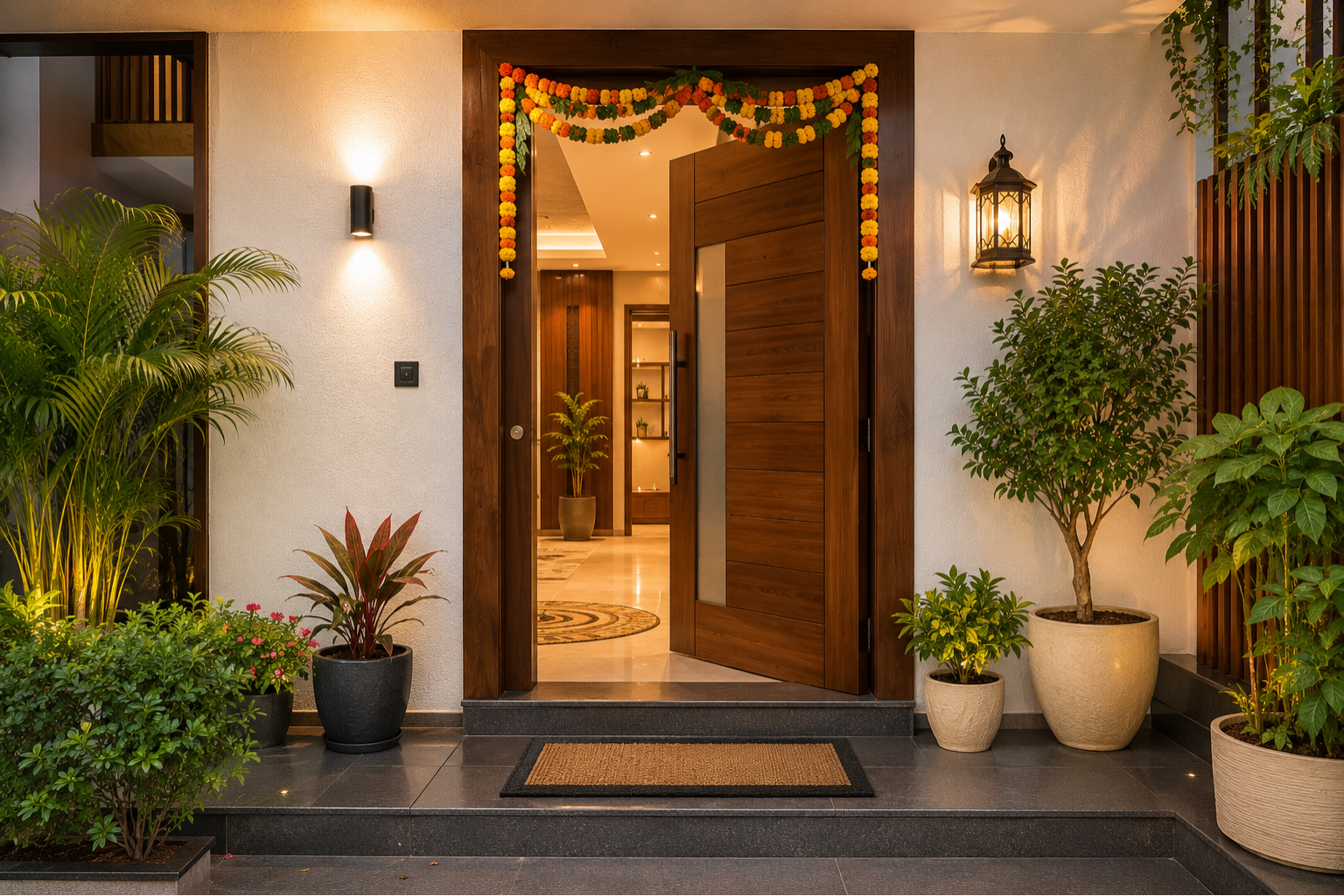
Grand wooden main entrance door with toran, nameplate, and warm lighting in an Indian home
Tip 5: Keep the Entrance Well-Lit Always
Darkness at the entrance is one of the most common Vastu problems in Indian homes and also one of the easiest to fix. A dark entrance blocks positive energy and creates a feeling of dullness and stagnation in the home.
Here is what good entrance lighting looks like in practice:
- A bright light directly above the main door is always on from dusk to bedtime
- A warm-toned bulb (2700–3000K) is not a cold white tube light, which looks harsh and unwelcoming
- If the entrance lobby inside is dark, add a wall-mounted sconce or a small table lamp on a console near the entrance
- A motion-sensor light on the outside of the door is both practical and keeps the entrance continuously activated
In our interior design projects across Gurgaon, entrance lighting is always one of the first things we address; it has an instant and dramatic effect on how a home feels the moment you walk in.
Tip 6: Place a Nameplate on the Right Side of the Door
The nameplate is far more important in Vastu than most people realise. It is the home's identity. It announces that the family is present and invites positive energy to find the right address.
Vastu guidelines for the nameplate:
- Position it on the right side of the main door, at eye level
- Material should ideally be brass, copper, or wood; avoid plastic nameplates for the main door
- The name should be clearly visible and well-lit an illuminated nameplate is even better
- Keep it clean and undamaged. A cracked or faded nameplate is considered inauspicious and should be replaced
Tip 7: Hang a Toran Above the Door
A toran, the decorative garland hung above the main door, is one of the oldest and most powerful Vastu remedies for the entrance. It is not just a decorative tradition. Vastu explains that the toran acts as a filter, welcoming positive energy while deflecting negative influences.
The most auspicious toran materials:
- Fresh mango leaves - the most traditional and most powerful. Replace weekly or when they dry out.
- Marigold flowers - bright yellow and orange are particularly auspicious. Associated with the Sun and positivity.
- Dried turmeric - a toran with turmeric pods is considered a powerful protector of the home.
- Beaded or fabric toran - for apartments where fresh flowers are not practical, a handwoven fabric toran in auspicious colours (yellow, red, green) is a good alternative.
Avoid artificial plastic tors if possible. If you use them, make sure they are in good condition. Torn or faded towels should be replaced immediately.
Tip 8: Place Lord Ganesha Near the Entrance
Lord Ganesha is the remover of obstacles, Vighnaharta. Placing a Ganesha idol or image near the main entrance is one of the most universally recommended Vastu remedies for any home, regardless of direction or other Vastu issues.
How to place Ganesha at the entrance:
- Position the idol so that Ganesha's back is towards the door and his face is towards the interior of the home he is welcoming those who enter, not looking outward
- Alternatively, a Ganesha image or symbol on the outside of the door (above or on the door panel) with the trunk turned to the left is also widely accepted.
- The idol can be marble, brass, or clay; all are auspicious
- Light a small diya or incense at the entrance each morning. This activates the space and keeps the energy fresh
Tip 9: Keep the Entrance Completely Clutter-Free
This is the tip that requires the least money but the most discipline, and it is arguably the most important one. A cluttered entrance is considered one of the biggest Vastu defects in any home. When energy enters your home and immediately encounters shoes, bags, umbrellas, delivery packages, and miscellaneous objects, it gets stuck. It cannot flow into the rest of the home.
Simple rules for a Vastu-compliant entrance:
- No shoes visible at the entrance. Use a closed shoe cabinet, not an open rack. If you have a shoe rack, make sure it is positioned to the side, not directly in front of the door and keep it closed.
- No dustbin near or visible from the entrance. Place dustbins inside the kitchen or bathroom, never near the front door.
- No broken objects, unused items, or old newspapers accumulated near the entrance.
- No mirror directly facing the main door. A mirror facing the main door reflects energy out; this is one of the most common Vastu mistakes in apartments.
If your entrance lobby is small, as it is in most Gurgaon 2BHK apartments, a thoughtfully designed foyer unit with hidden storage can solve the clutter problem beautifully while also adding a designed, welcoming feel to the entrance.
Tip 10: Add Plants and Flowers at the Entrance Thoughtfully
Fresh plants at the main entrance bring life, oxygen, and positive energy into the home. They are one of the most powerful and beautiful Vastu remedies and also one of the most enjoyable to maintain. However, Vastu is specific about which plants belong at the entrance and which ones do not.
Vastu-approved plants for the entrance:
- Tulsi (Holy Basil): The most auspicious plant for any Indian home. Place it ideally in the North or East direction of the entrance, in a dedicated pot or planter. It purifies the air and is spiritually powerful.
- Lucky Bamboo: Brings good fortune and positive energy. Keep the water in a clear glass vase, and change the water weekly.
- Money Plant: Associated with financial growth. Keep it green and healthy; a yellowing money plant is considered inauspicious.
- Flowering plants: Marigold, jasmine, or any bright flowering plant in a pot on either side of the entrance door. Change or replace when flowers wilt.
Plants to avoid at the entrance:
- Cactus or thorny plants: Associated with conflict and hostility. Keep these inside the home, away from the entrance.
- Dead or dry plants: A dead plant at the entrance is considered highly inauspicious. Replace immediately.
- Bonsai represents stunted growth in Vastu. Not recommended for the entrance.
Bonus Vastu Tips for Home Entrance
- The threshold (doorstep) should be slightly elevated, not at ground level. A small step up into the home keeps water out and symbolically elevates the home above ground energy.
- The door should have two panels (double door) rather than a single panel wherever possible. A single-panel door, if unavoidable, should ideally be wider than standard.
- No toilet or bathroom door should be visible directly from or opposite the main entrance.
- The door hinges should not creak. A noisy, stiff, or creaking door is a Vastu defect; keep hinges oiled.
- The Swastik and Om symbols on the main door are widely considered protective and auspicious, either engraved, painted, or as a metal emblem fixed to the door.
Quick Vastu Checklist for Your Main Entrance
| Vastu Element | What To Do | Cost |
|---|---|---|
| Direction | Check using a compass. North or East is best. | Free |
| Door colour | Match colour to direction. Avoid black. | ₹500–₹3,000 |
| Door material | Solid wood or wood-clad. Opens inward. | ₹15,000–₹80,000 |
| Lighting | Bright warm light above the door. Always on at night. | ₹800–₹5,000 |
| Nameplate | Right side of the door. Brass, copper, or wood. | ₹500–₹3,000 |
| Toran | Mango leaves or marigold above the door. | ₹50–₹500 |
| Ganesha | Near the entrance, facing inward. | ₹500–₹5,000 |
| Clutter | Remove shoes, bags, and dustbins from the entrance view. | Free |
| Plants | Tulsi, money plant, or flowering plant. No cactus. | ₹100–₹2,000 |
| Mirror | No mirror directly facing the main door. | Free to fix |
Vastu and Modern Design: They Work Together
One thing we often hear from homeowners is "I want a modern, minimalist home. Can Vastu and modern design go together?" The answer is absolutely yes. Vastu is not about making your home look old-fashioned or cluttered with religious objects. It is about energy, light, direction, and flow, all of which modern architecture cares about deeply.
A North or East-facing entrance with a beautiful solid wood door, warm lighting, a sleek brass nameplate, a subtle Ganesha on a wall-mounted console, and a potted Tulsi in a designer planter this looks completely modern and is 100% Vastu-compliant. The two are not opposites. They are complementary.
For inspiration on how we integrate Vastu principles into contemporary residential projects in Gurgaon and Delhi, read our blog on Vastu-friendly interior design ideas for modern homes. And if you are planning a new home or renovation and want help designing a Vastu-compliant entrance that also looks stunning, our interior design team in Gurgaon would love to help.
Frequently Asked Questions Vastu for Main Entrance
Want a Vastu-Compliant Home Entrance That Also Looks Stunning?
Studio Rivet designs home interiors that respect Vastu principles while delivering contemporary, beautiful spaces. Based in DLF Phase 1, Gurugram. Serving Delhi NCR since 2005.
📍 49 Arjun Marg, DLF Phase 1, Sector 26, Gurugram – 122002
📞 +91 9971685572 | 📞 +91 9818491069 | ✉️ info@studiorivet.in
Related Articles
Vastu-Friendly Interior Design Ideas for Modern Homes
How to integrate Vastu principles without compromising on design quality
Small Flat Interior Design Ideas for 2BHK in Gurgaon
Room-by-room guide for compact apartment interiors in Delhi NCR
Best Interior Designers in Gurgaon 2026: What to Look For
A complete hiring guide for homeowners planning an interior project in Gurugram
Written by Studio Rivet
Studio Rivet is an architecture and interior design studio based at 49 Arjun Marg, DLF Phase 1, Gurugram. Founded in 2005, we work on residential, commercial, hospitality, and institutional projects across Delhi NCR. Learn more about us →

10 Coworking Space Design Trends in India for 2026 (Ranked)
India’s coworking market has grown faster than almost anyone expected. According to CBRE India

Vastu Shastra Friendly Interior Design Ideas for Modern Homes
Designing a modern home today goes far beyond aesthetics. Homeowners are increasingly looking for sp
False ceiling design ideas for indian living rooms 2026
The false ceiling design for living room is no longer a luxury reserved for premium homes. In 2026,
Leave a Reply