


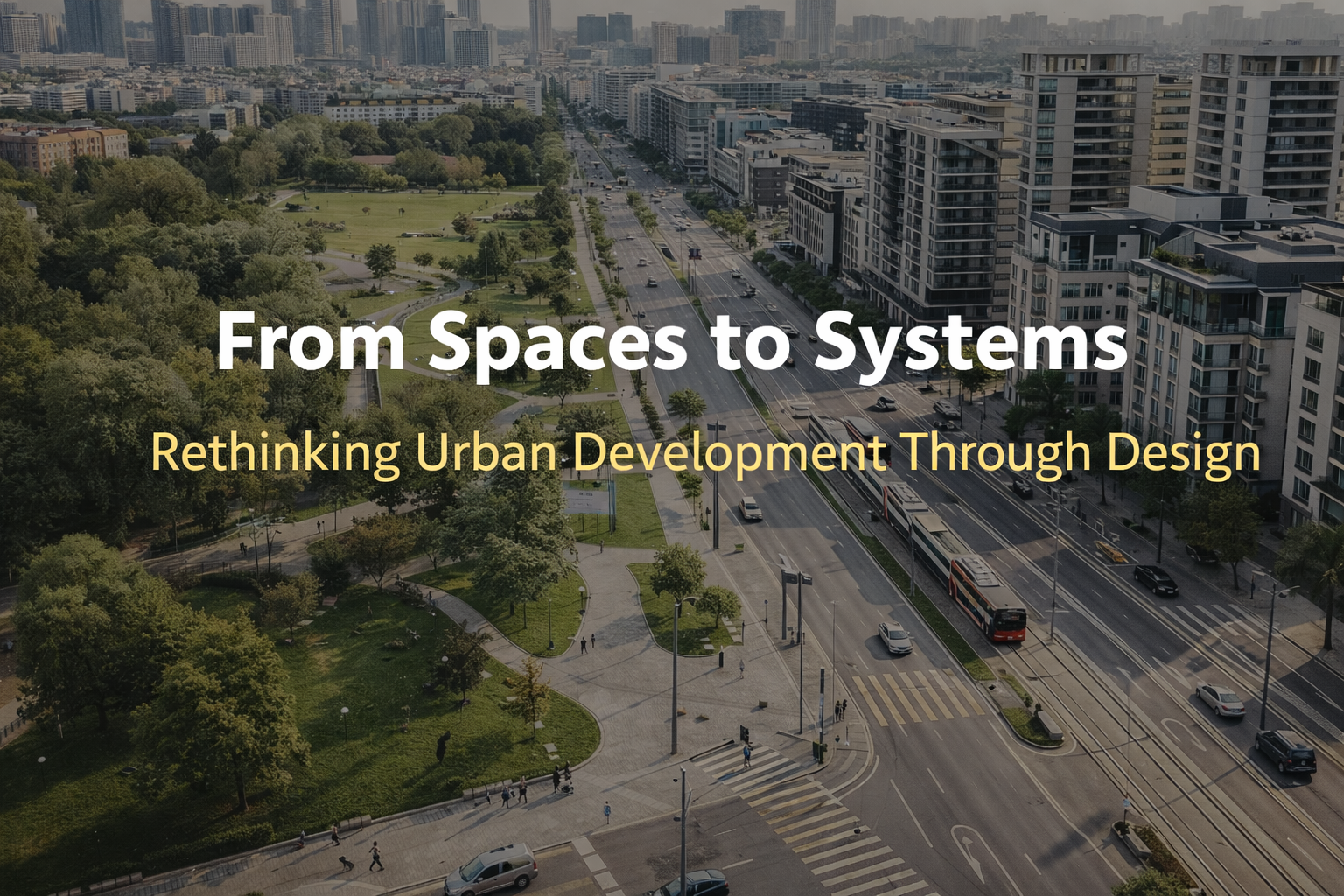
From Spaces to Systems: Rethinking Urban Development Through Design
Urban development is no longer limited to designing individual buildings or isolated spaces. As cities expand, the challenges they face have become more complex. Traffic congestion, environmental stress, a lack of public spaces, and unequal access to services are common issues in growing urban areas. Addressing these challenges requires a shift in thinking from focusing on single spaces to understanding cities as connected systems.
Rethinking urban development through design means planning cities where buildings, public spaces, infrastructure, and communities work together. A system-based approach creates efficient, inclusive, and prepared cities.
At Studio Rivet, urban development is approached from this broader perspective. This is where design is not just about form, but about how different elements of the city interact and support everyday life.
Understanding Urban Development as a System
A city functions like a living system. Housing, roads, public transport, utilities, open spaces, and social infrastructure are all interconnected. When one part of the system is poorly planned, it affects the rest.
Modern urban design looks at how these elements function together rather than in isolation. For example, residential areas should be well connected to workplaces, schools, and public amenities. Transport systems should support easy movement while reducing environmental impact.
When urban development is designed as a system, it improves efficiency and enhances the quality of life for people living in the city.
Moving beyond individual spaces
Designing a well-planned building is critical, but not enough. A building that does not connect well with its surroundings adds value to the city.
Urban development must focus on how individual spaces relate to streets, neighbourhoods, and public areas. Walkways, parks, and shared spaces link private and public environments. This connection encourages interaction, improves safety, and makes cities more user-friendly.
Thinking beyond individual spaces helps create complete neighbourhoods.
Connectivity as the Foundation of Urban Design
Connectivity is a key element of system-based urban development. This includes physical connectivity, such as roads, footpaths, and public transport, as well as social connectivity through public spaces and community areas.
Cities designed with strong connectivity reduce dependence on private vehicles and promote walking and cycling. Efficient public transport systems make daily travel easier and reduce congestion. Well-connected public spaces encourage people to spend time outdoors and engage with their surroundings.
Having adequate connectivity supports economic activity, social interaction, and healthy lifestyles.
Designing cities for people
Urban development should always place people at the centre of design decisions. Cities exist to support human life, not just infrastructure or real estate growth.
People-centric urban design focuses on comfort, safety, and accessibility. Public spaces such as parks, plazas, and community centres allow people to gather, relax, and connect. Mixed-use developments bring housing, workspaces, and services closer together, reducing travel time and improving convenience.
When urban systems are designed around people, cities become more inclusive and enjoyable to live in.
Sustainability at the urban scale
Sustainability is a critical part of modern urban development. Sustainable design should not be limited to individual green buildings. It needs to be applied at the system level.
Urban sustainability includes efficient transport networks, proper waste management, water conservation, and an energy-efficient infrastructure. Green spaces and trees regulate temperatures, improve air quality, and manage stormwater.
A system-based approach to sustainability ensures long-term environmental health while supporting urban growth.
Integrating infrastructure with Urban Design
Infrastructure is the backbone of any city. Roads, drainage systems, utilities, and public services must be planned alongside urban design in the early stages.
When infrastructure is treated as an afterthought, inefficiencies and disruptions occur. Integrated planning ensures that the infrastructure supports urban life smoothly and adapts to future needs.
Well-integrated systems make cities more resilient and capable of handling growth and change.
Flexibility in urban systems
Cities are constantly evolving. Changes in population, technology, and lifestyle affect how spaces are used. Urban development must be flexible enough to adapt to these changes.
Designing adaptable spaces, mixed-use areas, and scalable infrastructure allows cities to respond to future demands without major redevelopment. Flexible urban systems reduce long-term costs and improve sustainability.
A city designed with flexibility in mind remains relevant and functional over time.
The Importance of Long-Term Vision
Urban development requires long-term thinking. Short-term solutions may solve immediate problems but create significant challenges later.
Design-led urban planning focuses on future growth, climate impact, and social needs. A clear long-term vision helps align development goals, infrastructure investment, and community needs.
Cities that are planned with a strong vision grow more organised and balanced.
From Spaces to Systems: A New Way Forward
Rethinking urban development means understanding that cities are more than buildings. They are systems that influence how people live, move, and connect.
By shifting focus from individual spaces to interconnected systems, urban design can address current challenges and prepare cities for the future. This approach supports efficiency, sustainability, and social well-being.
At Studio Rivet, our urban initiatives are guided by the belief that thoughtful design can create functional and meaningful cities.
Why This Approach Matters
As urban populations grow, cities will directly impact their quality of life. System-based urban development manages growth responsibly while improving our daily experiences.
Designing cities as connected systems allows urban environments to function smoothly, support communities, and adapt to change. This approach ensures development adds long-term value rather than short-term solutions.
Urban development through design is not just about building cities—it is about shaping better futures.
Frequently Asked Questions (FAQs)
1. What does “from spaces to systems” mean in urban design?
It means planning cities as connected networks rather than focusing only on individual buildings or spaces.
2. Why is a system-based approach critical in urban development?
It improves connectivity, efficiency, sustainability, and the overall quality of life in cities.
3. How does urban design affect daily life?
It influences movement, safety, access to services, social interaction, and comfort within the city.
4. What role does sustainability play in urban systems?
Sustainability helps manage resources, reduce environmental impact, and create healthier urban environments.
5. Can urban systems adapt to future changes?
Yes, well-designed urban systems are flexible and respond to growth, technological, and lifestyle changes.
Leave a Reply