


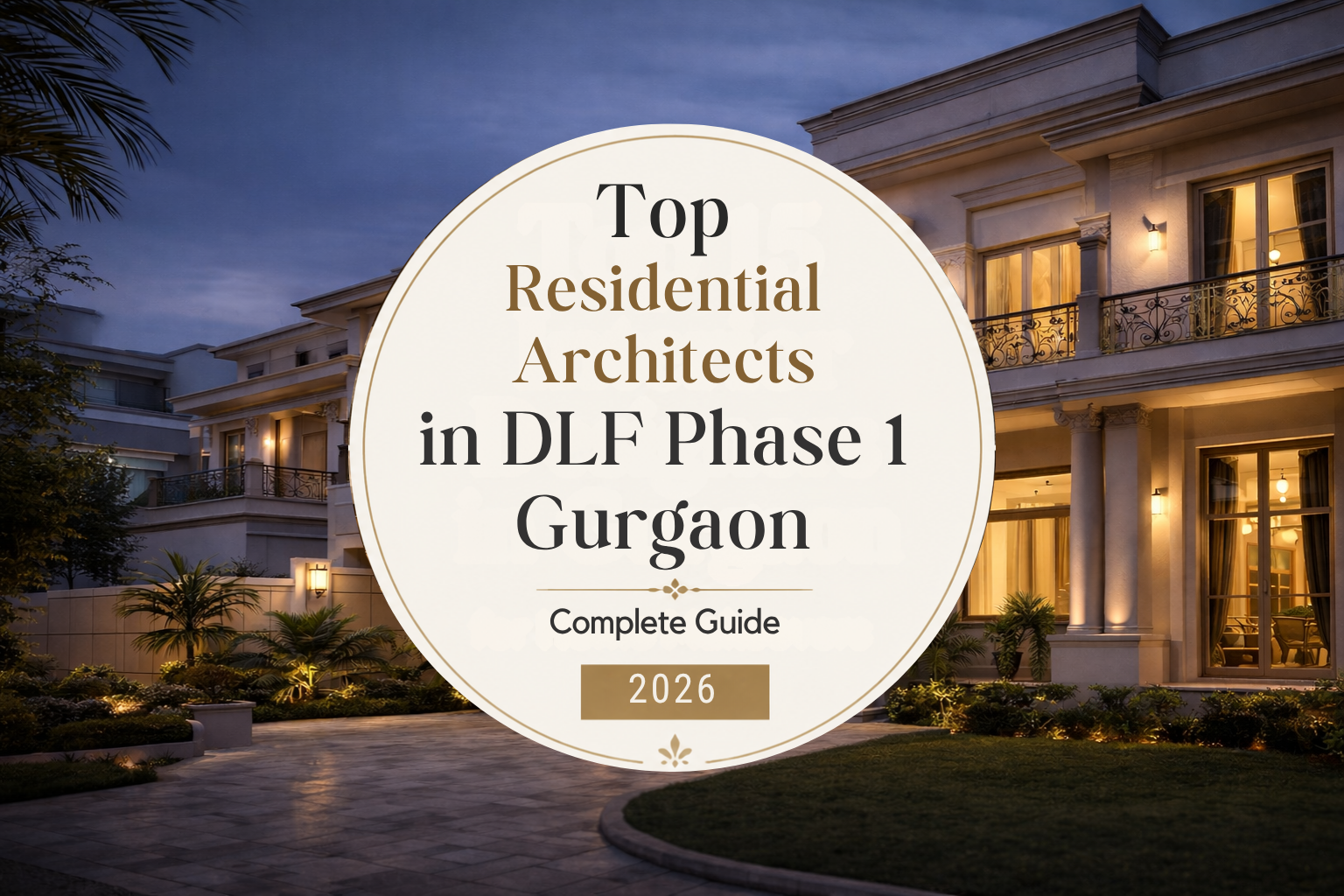
Top Residential Architects in DLF Phase 1 Gurgaon: A Complete 2026 Guide
If you own a plot in DLF Phase 1 and are planning to build or renovate, choosing the right residential architects is the single most consequential decision you will make, more than the contractor, more than the materials, more than the finishing choices. The architect shapes the vision. Everything else follows.
This guide is written specifically for DLF Phase 1 homeowners and plot holders in Gurugram. It covers what a good residential architect brings to a project, the specific regulatory framework you need to understand in this locality, what the process looks like from the first meeting to final handover, and how to evaluate and compare architectural firms before signing anything.
Why DLF Phase 1 Is Different from the Rest of Gurgaon
DLF Phase 1 is one of the oldest and most well-established residential neighbourhoods in Gurugram. It is known for its wide streets, independent housing, and quick access to MG Road, Sikanderpur Metro, and DLF Cyber City. It is a low-density area with predominantly plotted development, independent houses, builder floors, and a handful of smaller apartment clusters.
This character makes DLF Phase 1 architecturally significant for several reasons:
Established neighbourhood rules: Unlike newer sectors where construction is still defining itself, DLF Phase 1 has a mature street character. The best architects here understand how a new build or renovation should sit within, not against, that established context.
Premium plot sizes: Plots in DLF Phase 1 tend to be larger than most plots in Gurgaon, which creates real architectural opportunity. A 300–500 sq. yard plot gives an architect the room to design something genuinely interesting: double-height volumes, courtyard layouts, thoughtful setbacks, and landscape integration.
High expectations: Residents and buyers in DLF Phase 1 are among the most discerning in Delhi NCR. They have often lived in premium housing before, have travelled internationally, and have strong ideas about what quality looks like. The best architects in the area know how to listen to a sophisticated brief and translate it faithfully.
Proximity to Studio Rivet: Our studio is based at 49 Arjun Marg, DLF Phase 1, which means we are not just familiar with this neighbourhood professionally, we are embedded in it. We understand its micro-character, its vendor ecosystem, and its regulatory nuances in a way that a firm based in Noida or South Delhi simply cannot.
What a Residential Architect in DLF Phase 1 Actually Does
There is widespread confusion, especially among first-time builders, about what an architect does versus what a contractor or interior designer does. Here is the clear breakdown.
What the Architect Is Responsible For
Site analysis and conceptual design: Before a single drawing is produced, a good architect spends time understanding the plot’s orientation, access, neighbouring structures, sunlight angles, prevailing wind direction, views, and any existing trees or structures that should inform the design. This analysis directly shapes the concept.
Spatial planning: This is the heart of architecture. How the rooms relate to each other, how movement flows through the house, where natural light falls at different times of day, how the building interacts with the garden and street, these decisions are made in the planning stage and are costly to reverse later.
DTCP/MCG plan approval: In Gurgaon, new construction and significant renovation require a building plan approved by the Municipal Corporation of Gurgaon (MCG) or the Directorate of Town and Country Planning (DTCP/Haryana TCP), processed online via the HOBPAS portal. Registered architects empanelled with MCG or TCP prepare, certify, and submit these plans.
Construction documentation: Once the concept is approved, your architect produces the full set of drawings that the contractor actually builds from floor plans, sections, elevations, structural coordination drawings, electrical layouts, plumbing schematics, and detailed joinery drawings.
Site supervision: A responsible architect visits the site regularly during construction to ensure the building is being executed as designed. Without this oversight, contractors often make shortcuts that are impossible to see once the walls are plastered.
Understanding the Regulatory Framework in DLF Phase 1
Before your architect begins any design work, both of you need to understand what the local building bylaws allow. Getting this wrong early, even at the sketch stage, leads to wasted design fees and painful revisions.
Key Regulatory Points for DLF Phase 1, Gurugram
Approved authority: DLF Phase 1 falls under the jurisdiction of DTCP Haryana (Directorate of Town and Country Planning). The DTCP master plan for DLF Phase 1 outlines residential plots, internal roads, green spaces, and utility zones with clearly defined sector boundaries, and road widths and access points comply with sanctioned planning norms.
Building plan approval: Approval starts with verifying plot eligibility (minimum 10-metre road width for S+4, zoning, no encroachments), conducting a soil test and topographical survey, and engaging a registered architect for the required drawings showing setbacks, parking, and rainwater harvesting.
Height and floor rules: Under the current Haryana building bylaws, the permissible height and FAR (Floor Area Ratio) depend on the plot size and road width. For most residential plots in DLF Phase 1, a stilt plus four-floor (S+4) configuration is typically permissible, subject to compliance with setback requirements. Your architect must confirm the exact permissible FAR for your specific plot with the relevant authority before commencing design.
Setbacks: Every plot in DLF Phase 1 has mandatory setback requirements, minimum distances between the building and the plot boundaries on the front, rear, and sides. Violating these voids your approval and exposes you to demolition orders.
Parking: All new residential construction in Gurugram must include adequate parking, typically one dedicated covered space per dwelling unit at a minimum, as shown in the submitted building plans.
HOBPAS self-certification: Registered architects and engineers can now self-certify building plans for residential buildings up to a certain size, significantly reducing bureaucratic delays. However, this only applies to empanelled professionals; another reason to ensure your chosen architect holds the correct registrations.
7 Qualities That Define the Best Residential Architects in DLF Phase 1
1. DTCP/MCG Empanelment and Registration
This is not optional. Your architect must be a registered professional with the Council of Architecture (COA) and, for plan approvals in Gurgaon, must be empanelled with the relevant authority. Before hiring anyone, ask to see their COA registration certificate and confirm their empanelment status directly with the HOBPAS portal. A non-empanelled architect cannot legally sign and submit your building plans.
2. Demonstrated Experience in Plotted Residential Projects
DLF Phase 1 is a plotted residential neighbourhood. Your architect should have a strong portfolio of independent homes, not just apartments, not just commercial projects. Ask specifically for examples of buildings on plots of similar size to yours, in similar Gurgaon localities. Study the spatial planning, the section design (how floors stack), the relationship between indoor and outdoor space, and the quality of light in the finished photographs.
3. Structural Coordination Capability
Architecture and structure must be coordinated from the very beginning, not bolted together at the end. The best residential architects in Gurgaon either have in-house structural engineering capability or maintain long-term relationships with trusted structural consultants. Ask how your firm handles this coordination and what the structural engineer’s involvement is at each stage.
4. Familiarity with Local Materials and Vendors
The material ecosystem in Gurgaon is well-developed, with stone, tile, façade cladding, hardware, glass, and joinery suppliers all accessible from the local supply chain. A well-connected architect knows where to source premium materials at fair prices, which vendor relationships to leverage for your budget, and which suppliers have historically delivered on schedule. This practical market knowledge is invaluable and comes only with local experience.
5. Transparency on Fees and Scope
Architectural fees in India are not standardised, which creates enormous variation. Most residential architects in Gurgaon charge either a fixed fee based on the project scope or a percentage of the construction cost (typically 5–10% for full services including site supervision). Some firms charge separately for design and execution oversight.
What you want is complete clarity upfront, in writing, on what the fee covers. Specifically:
- How many design iterations are included before additional charges apply?
- What is included in construction documentation?
- How many site visits are included per month?
- What are the payment milestones?
A good architect will answer all of this without hesitation. Vague answers on fees at the proposal stage are a preview of how the project will be managed.
6. Communication That Matches Your Style
Architectural projects run for 12–24 months from the first brief to handover on a full residential build. You will make hundreds of decisions together, such as materials, windows, staircase design, roof treatment, kitchen layout, bathroom fittings, and landscape edges. The relationship between a homeowner and an architect needs to work. Pay attention to how a studio communicates before you sign: How quickly do they respond? Do they listen carefully or talk over you? Do they explain technical things in plain language?
7. Post-Occupancy Accountability
The best architects stand behind their work after the building is occupied. Minor snagging of hairline cracks, door alignments, and tile grout issues are normal in any construction. What distinguishes a professional studio from a fly-by-night operation is how they handle these issues post-handover. Ask specifically what their defect liability period is and what the process is for raising and resolving snags.
The Residential Architectures Process: What to Expect
For a first-time builder in DLF Phase 1, understanding what happens at each stage removes a great deal of anxiety. Here is what a well-run residential project looks like from beginning to end.
Stage 1: Brief and Site Analysis (2–4 Weeks)
The project begins with a detailed client brief, the programme of spaces you need, your lifestyle requirements, your aesthetic preferences, your budget, and your timeline. Simultaneously, your architect conducts a thorough site analysis: survey of existing conditions, sun path study, soil test commissioning, and a review of the applicable building bylaws for your specific plot.
Stage 2: Concept Design (3–6 Weeks)
This is where the big ideas are formed. Your architect presents 1–2 concept schemes that respond to the brief and the site, showing floor plan layouts, a massing model or 3D view, and initial material and character references. This is the stage at which to raise all major questions and push for changes. Changes at the concept stage cost nothing beyond time. Changes at the construction stage cost money, time, and stress.
Stage 3: Design Development (4–8 Weeks)
Once the concept is approved, the design is developed in detail: all rooms dimensioned, services (electrical, plumbing, HVAC) coordinated, a structural system designed, a material palette confirmed, and all regulatory compliance verified. The output of this stage is the full set of drawings submitted for DTCP/HOBPAS approval.
Stage 4: Statutory Approval (4–12 Weeks)
Your architect submits the building plans for approval and manages the process, responding to any queries or revision requests from the authority. Timelines vary based on complexity and the current processing load at the DTCP office. For self-certification-eligible projects, this stage can be significantly faster.
Stage 5: Construction Documentation (4–6 Weeks)
With approval in hand, your architect produces the complete contractor drawing set, everything the contractor needs to build without guessing. This includes structural drawings (coordinated with the structural engineer), electrical layout, plumbing schematic, door and window schedules, joinery details, and finishing schedules.
Stage 6: Contractor Selection and Construction (12–24 Months)
Your architect helps with contractor shortlisting, tender evaluation, and contract preparation. During construction, they conduct regular site visits, review material samples against the specification, issue instructions for any variations, and certify completion milestones for staged payments.
Stage 7: Handover and Snagging
On practical completion, your architect conducts a thorough snagging inspection, produces a defect list, and monitors its resolution before issuing the completion certificate.
Architectural Fees and Construction Costs in DLF Phase 1 (2026)
Architectural Fees
For a full residential project in DLF Phase 1, typical architectural fees in 2026 range as follows:
- Design-only services (concept through approval drawings, no site supervision): ₹150–₹300 per sq. ft. of built area
- Full architectural services (design through handover, including site supervision): ₹350–₹600 per sq. ft. of built area, or 6–10% of the construction cost
- Boutique and specialist studios with strong portfolios may charge higher rates that are fully justified by the quality of the outcome.
These figures are for professional services only and do not include the construction cost itself.
Construction Costs
For a new independent house in DLF Phase 1, built to a good standard in 2026, construction costs typically range between:
- Good quality construction (RCC frame, standard finishes): ₹2,500–₹3,500 per sq. ft.
- Premium construction (upgraded materials, imported finishes, custom joinery): ₹3,500–₹5,500 per sq. ft.
- Luxury construction (bespoke everything, high-specification M&E, smart home systems): ₹5,500+ per sq. ft.
A 500 sq. yard plot with 3,000 sq. ft. of built area would therefore carry a construction cost in the range of ₹75 lakh to ₹1.65 crore, depending on specification, before professional fees, interior design, landscaping, and statutory costs.
Questions to Ask a Residential Architect Before Hiring Them
- Are you registered with the Council of Architecture and empanelled with DTCP/MCG for plan approvals?
- Can you show me three completed residential projects in DLF Phase 1 or similar Gurgaon localities?
- Who will be my primary design contact, and who supervises the site?
- What is your complete fee structure, and what does each stage cover?
- How many site visits do you include per month during construction?
- How do you coordinate structural and MEP (mechanical, electrical, plumbing) engineering?
- What is your standard turnaround time for construction drawings after design approval?
- What is your defect liability period, and what is the process for raising snags?
- Can you provide two client references from completed residential projects?
- What does your payment schedule look like, tied to which milestones?
Studio Rivet: Residential Architects Based in DLF Phase 1
Studio Rivet is an architecture and interior design studio based at 49 Arjun Marg, DLF Phase 1, Sector 26, Gurugram, in the very neighbourhood this guide is about. We have been designing residential, commercial, hospitality, and institutional buildings across Delhi NCR since 2005.
We work on plotted residential projects, independent houses, builder floors, and low-rise residential buildings with a design philosophy rooted in three principles: spatial quality, material honesty, and long-term livability. We are not interested in buildings that look impressive in photographs but are uncomfortable to live in. We design for the way people actually inhabit space.
Our process is transparent, our fees are fully itemised before you sign, and our site supervision is hands-on. If you own a plot in DLF Phase 1 or anywhere in Gurugram and are thinking about building or renovating, we would genuinely enjoy a conversation about it.
📍 49 Arjun Marg, DLF Phase 1, Sector 26, Gurugram – 122002
📞 +91 9971685572 | +91 9818491069
Studio Rivet is an architecture and interior design studio based in DLF Phase 1, Gurugram. We work on residential, commercial, hospitality, and institutional projects across Delhi NCR. Established in 2005.
Frequently Asked Questions

Small Flat Interior Design Ideas for 2BHK in Gurgaon
A 2BHK flat in Gurgaon is one of the most common and most challenging interior design briefs we rece

Interior Design That Serves a Purpose: A Modern Approach
Purposeful interior design today is not only about the space’s look. It is more about how the

Vastu Shastra Friendly Interior Design Ideas for Modern Homes
Designing a modern home today goes far beyond aesthetics. Homeowners are increasingly looking for sp
Leave a Reply